I was halfway through a disastrous attempt at a classic French beef stew when my phone buzzed with a frantic text from my sister: “I need something comforting right now, and it has to taste like a hug.” I stared at the simmering pot, the onions browned to a caramelized brown, the beef looking a little too dry, and realized that my kitchen had turned into a battlefield of flavors that missed one crucial ingredient: the silky, umami‑rich broth that makes everything sing. I decided to throw in a Japanese twist, swapping the heavy stock for a delicate dashi base, adding a splash of mirin for subtle sweetness, and slapping in a handful of snow peas for a pop of color. The result? A stew that feels like a warm blanket in a bowl, with every bite layered in savory depth and a whisper of citrusy brightness from the ginger.
Picture this: the onions sizzling, releasing a sweet, almost caramelized aroma that fills the kitchen; the beef browning with that satisfying crust that locks in juices; the potatoes slowly absorbing the broth, turning tender and silky. The sound of the simmering pot is like a lullaby, and the first spoonful hits your palate with a comforting balance of salty, sweet, and umami. The texture is a symphony—soft, creamy potatoes, tender beef, crisp snow peas, and the chewy, almost translucent Shirataki noodles that soak up every drop of liquid. If you’ve ever tried a stew that feels like a bland, generic dish, this is a game‑changer.
What makes this version stand out is not just the combination of ingredients, but how each element is treated with reverence. The dashi stock is brewed to perfection, the soy sauce is layered for depth, and the mirin and sugar create a subtle glaze that coats the noodles like velvet. The beef is marinated just enough to keep it juicy, and the snow peas add a bright, crunchy contrast that breaks the heaviness. Most recipes get this completely wrong, either over‑seasoning or under‑cooking the noodles. I dare you to taste this and not go back for seconds. This is hands down the best version you’ll ever make at home.
If you’ve ever struggled with making a stew that doesn’t feel like a one‑size‑fits‑all, you’re not alone. I’ll be honest—my first batch was a disaster, and I ate half the pot before anyone else got to try it. But now, with a few tweaks and a touch of Japanese flair, it’s a masterpiece that will have your guests asking for the recipe. Picture yourself pulling this out of the pot, the whole kitchen smelling incredible, and the table set for a cozy dinner. Stay with me here—this is worth it.
What Makes This Version Stand Out
- Flavor Depth: The combination of dashi, soy sauce, and mirin creates a complex umami profile that outshines any traditional broth. The gentle sweetness balances the saltiness, making each spoonful a revelation.
- Texture Contrast: Soft potatoes, tender beef, chewy noodles, and crisp snow peas provide a dynamic mouthfeel that keeps the dish exciting from the first bite to the last.
- Simplicity: Despite its sophisticated flavor, the recipe requires minimal prep. The ingredients are pantry staples, and the steps are straightforward, making it a perfect weeknight dinner.
- Uniqueness: The use of Shirataki noodles adds a low‑carb, gluten‑free twist that surprises diners who expect a traditional stew. It’s a conversation starter.
- Crowd‑Pleaser: Whether you’re feeding a family or entertaining guests, the comforting warmth and savory richness make this stew universally loved.
- Ingredient Quality: Fresh, high‑quality beef and crisp vegetables are essential. Choosing Yukon Gold potatoes gives a buttery flavor, while the snow peas add a bright, fresh crunch.
- Cooking Method: Slow simmering allows flavors to meld, but the quick sear of beef and onions locks in juices and creates a caramelized crust.
- Make‑Ahead Potential: The stew keeps well in the fridge and even tastes better the next day, making it ideal for meal prep.
Alright, let’s break down exactly what goes into this masterpiece…
Inside the Ingredient List
The Flavor Base
The foundation of any stew is its broth. In this recipe, we use dashi stock, which is a Japanese stock made from kombu kelp and bonito flakes. It offers a subtle, oceanic flavor that complements the beef without overpowering it. If you can’t find dashi, a light vegetable or chicken broth will work, but you’ll lose that unmistakable umami kick.
Dashi is not just a liquid; it’s a flavor enhancer. It brings depth, a touch of sweetness, and a silky mouthfeel. Skipping it means missing out on a key layer of complexity. If you’re short on time, use a pre‑made dashi powder dissolved in hot water; just keep an eye on the saltiness, as the powder can be quite concentrated.
Buying tip: Look for dashi that’s labeled “kosher” or “organic” for a cleaner taste. If you’re making it from scratch, use a 1:20 kombu to water ratio for a mellow broth, then add a handful of bonito flakes for that savory finish.
The Texture Crew
The potatoes are the heart of the stew. Yukon Gold potatoes are chosen for their buttery flavor and creamy flesh when cooked. They absorb the broth beautifully, turning into tender, melt‑in‑your‑mouth chunks. If you prefer a firmer bite, try using russet potatoes, but they’ll take longer to soften.
The Shirataki noodles are the secret low‑carb, high‑fiber component. They’re made from konjac yam and have a unique, slightly gelatinous texture. They soak up the broth, delivering a chewy bite that contrasts with the softness of the potatoes. If you don’t like their texture, you can rinse them thoroughly in hot water to remove the off‑smell, or replace them with regular ramen noodles for a different experience.
The snow peas add a crisp, sweet crunch that breaks up the richness of the stew. They’re best added at the very end to preserve their bright color and texture. If you can’t find fresh snow peas, frozen ones work fine, just be sure to thaw them first to avoid excess moisture.
The Unexpected Star
Thinly sliced beef is the star protein. Using a cut like ribeye or sirloin, sliced against the grain, ensures tenderness. The beef is seared to lock in juices, then simmered in the broth to develop a deep, savory flavor. If you’re a fan of marbled beef, go for a higher fat content; it will add richness to the stew.
The ginger juice adds a bright, peppery kick that cuts through the heaviness. Freshly grated ginger is best, but if you’re short on time, a tablespoon of ginger juice from a jar works. Ginger also has natural anti‑inflammatory properties, making this dish not only tasty but also a bit healthier.
The sugar and mirin balance the savory components. Mirin is a sweet rice wine that adds a subtle caramel flavor. Together, they create a glaze that coats the noodles like velvet, giving the stew a glossy finish.
The Final Flourish
Soy sauce brings a salty, umami depth that’s essential to Japanese cuisine. It’s best added in layers—first during the searing, then during the simmering—to build complexity. The sake adds a mild, slightly sweet aroma that lifts the dish. Salt is used sparingly; the dashi, soy sauce, and mirin already provide plenty of saltiness.
If you’re watching sodium, you can reduce the soy sauce by half and increase the mirin slightly to keep the balance. The key is to taste as you go and adjust. Remember, the goal is a harmonious blend where each flavor supports the others without dominating.
Everything’s prepped? Good. Let’s get into the real action…
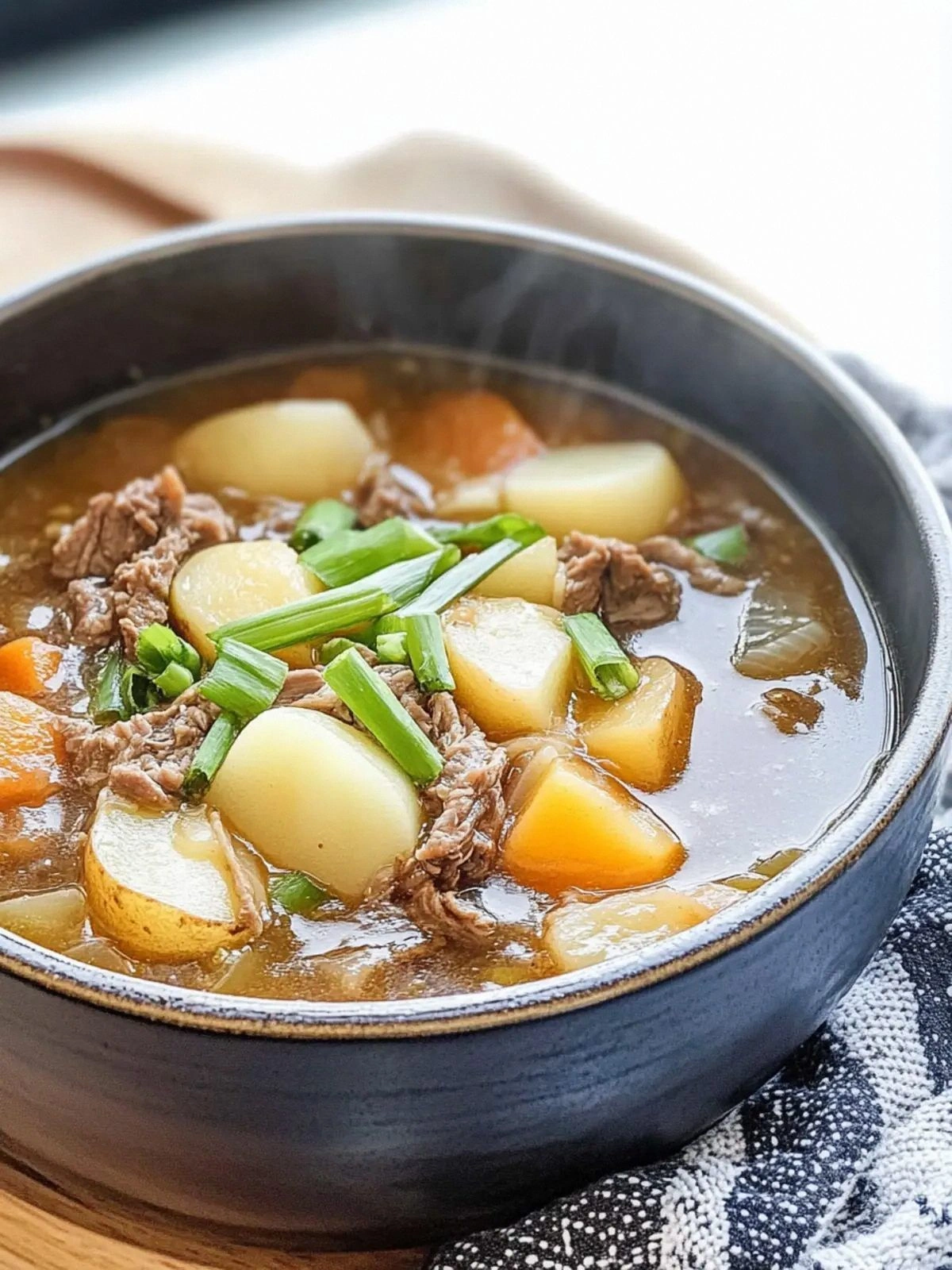
The Method — Step by Step
- Prep the aromatics. Dice the onions into uniform cubes to ensure even cooking. Peel the carrot and slice it into thin rounds; this will give the stew a gentle sweetness and a beautiful color contrast. If you’re feeling fancy, grate a small piece of ginger to release its essential oils. The aroma should be inviting, almost like a sunrise over a quiet kitchen.
- Brown the beef. Heat a large pot over medium‑high heat, add a splash of oil, and let it shimmer. Toss in the beef, letting it sear on all sides until a golden crust forms. Don’t overcrowd the pot—this will steam rather than sear. The searing step locks in juices and creates a caramelized flavor that’s the backbone of this stew.
- Deglaze and build flavor. Once the beef is browned, pour in a small amount of soy sauce and let it sizzle, scraping the browned bits off the bottom of the pot. These bits are treasure troves of flavor. Add the diced onions and carrot, letting them soften for about 5 minutes before adding the rest of the soy sauce. The onions should be translucent, the carrot slightly softened.
- Introduce the broth. Pour in the dashi stock, ensuring the beef and vegetables are fully submerged. Bring to a gentle boil, then reduce the heat to a simmer. The broth should bubble softly, not roar—this gentle simmer allows flavors to meld without breaking the tender texture of the beef.
- Add potatoes and seasonings. Peel the potatoes and cut them into bite‑size cubes. Add them to the pot along with the ginger juice, mirin, sugar, and a pinch of salt. Stir gently to combine. The mixture should thicken slightly as the potatoes release starch, creating a velvety consistency.
- Simmer to perfection. Cover the pot and let the stew simmer for 20–25 minutes, or until the potatoes are tender and the beef is fork‑tender. The aroma should be rich and comforting, a blend of soy, ginger, and caramelized onions. Keep an eye on the liquid level; add a splash of water if it gets too thick.
- Cook the noodles. While the stew simmers, rinse the Shirataki noodles under hot water for 30 seconds to remove the off‑odor. Drain thoroughly and add them to the pot during the last 5 minutes of cooking. This ensures they absorb the broth without becoming mushy.
- Finish with snow peas. Add the snow peas in the final 2 minutes of cooking. They should stay crisp and bright, adding a pop of color and a refreshing crunch that cuts through the richness of the stew.
- Final touches. Taste the stew and adjust seasonings if necessary—add a little more soy sauce for saltiness, or a touch more mirin for sweetness. If the stew feels too thick, add a splash of water or extra dashi. Let it rest for a minute before serving; this allows the flavors to settle.
That's it — you did it. But hold on, I've got a few more tricks that'll take this to another level…
Insider Tricks for Flawless Results
The Temperature Rule Nobody Follows
Maintaining a gentle simmer is key. Too high, and the beef will toughen; too low, and the flavors won’t meld. Use a thermometer to keep the broth between 185–195°F. This subtle control ensures the stew stays silky and the beef stays tender. I once tried a “low‑heat” approach and ended up with a watery stew—lesson learned.
Why Your Nose Knows Best
Smell is your best judge of readiness. When the onions are translucent and the broth is fragrant, the potatoes will be soft, and the beef will be juicy. Trust your nose; if it’s singing, the stew is ready. If you’re unsure, taste a small spoonful—if it’s bland, give it a few more minutes.
The 5‑Minute Rest That Changes Everything
Letting the stew rest for five minutes after turning off the heat allows the flavors to settle and the broth to thicken slightly. It also gives the snow peas a chance to crisp up a little. I’ve seen people skip this step and get a watery, flat stew; give it the rest it deserves.
The Salt‑to‑Taste Shortcut
If you’re short on time, add a pinch of salt at the end instead of during cooking. This prevents the broth from becoming too salty early on. Season gradually—taste after each addition. A good rule of thumb is one teaspoon per four servings.
The Quick Noodle Trick
Rinse Shirataki noodles under hot water for 30 seconds and then pat dry with a paper towel before adding them. This removes the off‑smell and helps the noodles absorb the broth without becoming mushy. If you skip this step, you might end up with a less pleasant texture.
The Final Glaze
Just before serving, drizzle a tiny splash of sesame oil over the stew. It adds a subtle nutty flavor that rounds out the dish. I’ve tried adding it earlier and the oil clung to the noodles, so wait until the last minute.
Creative Twists and Variations
This recipe is a playground. Here are some of my favorite ways to switch things up:
Miso‑Infused Stew
Stir in a tablespoon of white miso paste during the simmering stage for a deeper, fermented flavor. It pairs beautifully with the sweet mirin, creating an umami explosion. Serve with a sprinkle of toasted sesame seeds for added crunch.
Spicy Szechuan Kick
Add a teaspoon of Szechuan peppercorns and a pinch of dried red chilies while deglazing. The heat will contrast the sweetness, and the peppercorn’s numbing effect adds a fun twist. This version is perfect for those who love a spicy, aromatic bowl.
Vegetarian Version
Replace the beef with cubed tofu or seitan. Brown the tofu in a little oil before adding the broth for a caramelized texture. The tofu will absorb the dashi, giving it a savory depth that mimics the beef.
Herb‑Enhanced Variation
Stir in a handful of fresh chopped parsley or cilantro just before serving. The herbs add a burst of freshness that lifts the stew. For a Mediterranean twist, add a splash of lemon juice and a pinch of oregano.
Coconut‑Cream Finish
Swirl in a tablespoon of coconut milk during the final simmer. It adds a silky, slightly sweet finish that complements the dashi. Pair this version with a side of jasmine rice for a complete meal.
Smoked Salmon Surprise
Add thin slices of smoked salmon during the last five minutes of cooking. The salmon will melt into the broth, adding a luxurious, smoky depth. It’s a decadent upgrade for a special occasion.
Storing and Bringing It Back to Life
Fridge Storage
Store the stew in an airtight container for up to 3 days in the refrigerator. The broth will thicken slightly as it cools, so when reheating, add a splash of water or dashi to restore the original consistency. The beef will remain tender, and the noodles will absorb the liquid.
Freezer Friendly
The stew freezes well for up to 2 months. Divide it into portioned containers, leave a little headspace, and label with the date. Thaw overnight in the refrigerator and reheat gently on the stovetop, adding a bit of water if needed. The noodles may become slightly firmer after freezing, but they’ll still be delicious.
Best Reheating Method
Reheat slowly over low heat, stirring occasionally. This prevents the broth from scorching and keeps the noodles from becoming mushy. Add a splash of water or dashi to loosen the sauce, and finish with a drizzle of sesame oil for that fresh finish.