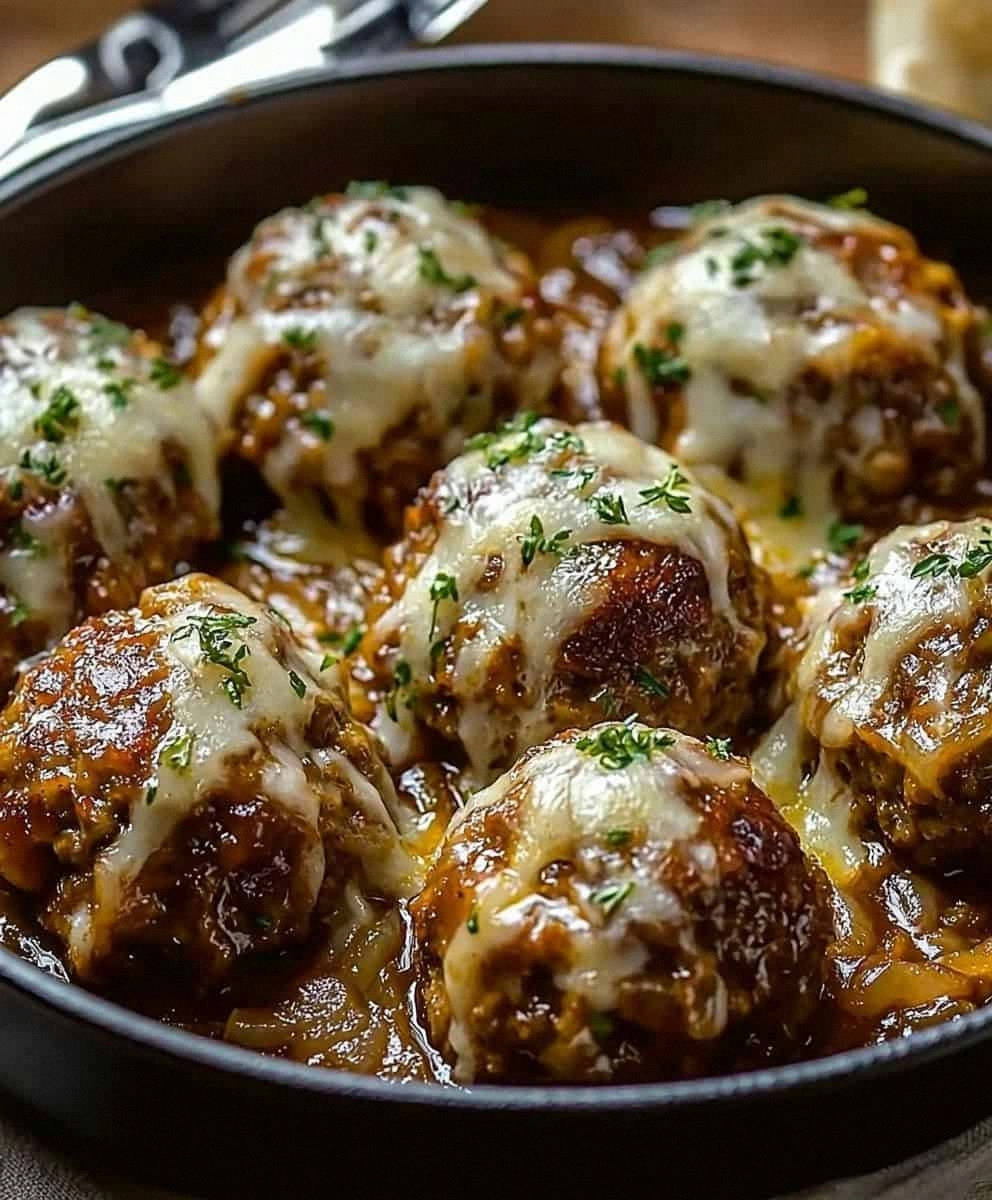
I still remember the first time I tried to make French onion soup in college. I burned the onions so badly that my roommate threatened to call the fire department, and the whole apartment smelled like a smoldering campfire for three days. Fast forward a decade, and I'm still obsessed with that deep, caramelized flavor—just without the smoke alarm soundtrack. That's how these French onion meatballs were born: a desperate craving for those rich, jammy onions and gooey cheese, but in a form that won't leave me scrubbing a pot until midnight.
Picture this: it's Sunday afternoon, the kind of gray winter day that makes you want to hibernate under a blanket forever. I was rummaging through the fridge, hunting for something—anything—that would warm me from the inside out. Ground beef, a couple of sad onions, some Gruyère left over from a charcuterie board. My stomach growled louder than my neighbor's Husky. In that moment, lightning struck. What if I could capture everything I loved about French onion soup—the silky onions, the beefy broth, that molten cheese cap—and pack it into juicy, tender meatballs? My kitchen became a laboratory, and by the time the sun set, I'd created something that made me dance around in my slippers.
These meatballs are the culinary equivalent of slipping into a cashmere sweater: pure comfort, but with a sophistication that makes you feel like you've got your life together (even if you're eating them standing over the sink). The secret isn't just tossing onions into ground beef and hoping for the best. Nope. We're talking about deeply caramelized onions that melt into the sauce, a two-meat blend for maximum flavor, and a final blanket of Gruyère that bubbles and browns like the top of a perfect gratin. If you've ever struggled with dry meatballs or bland sauces, you're not alone—and I've got the fix.
Let me walk you through every single step—by the end, you'll wonder how you ever made it any other way.
What Makes This Version Stand Out
- Double-Onion Power: We're not just tossing raw onions into the mix. First, we slowly caramelize half the onions until they're jammy and sweet, then fold that into the meat. The other half becomes the silky sauce base. It's onion flavor at two levels—deep and mellow in the meatball, bright and brothy in the gravy.
- Two-Meat Magic: All-beef meatballs can taste one-note and dense. By blending beef with pork, you get a lighter, juicier bite with a whisper of sweetness from the pork fat. The texture is fork-tender, not hockey-puck tough.
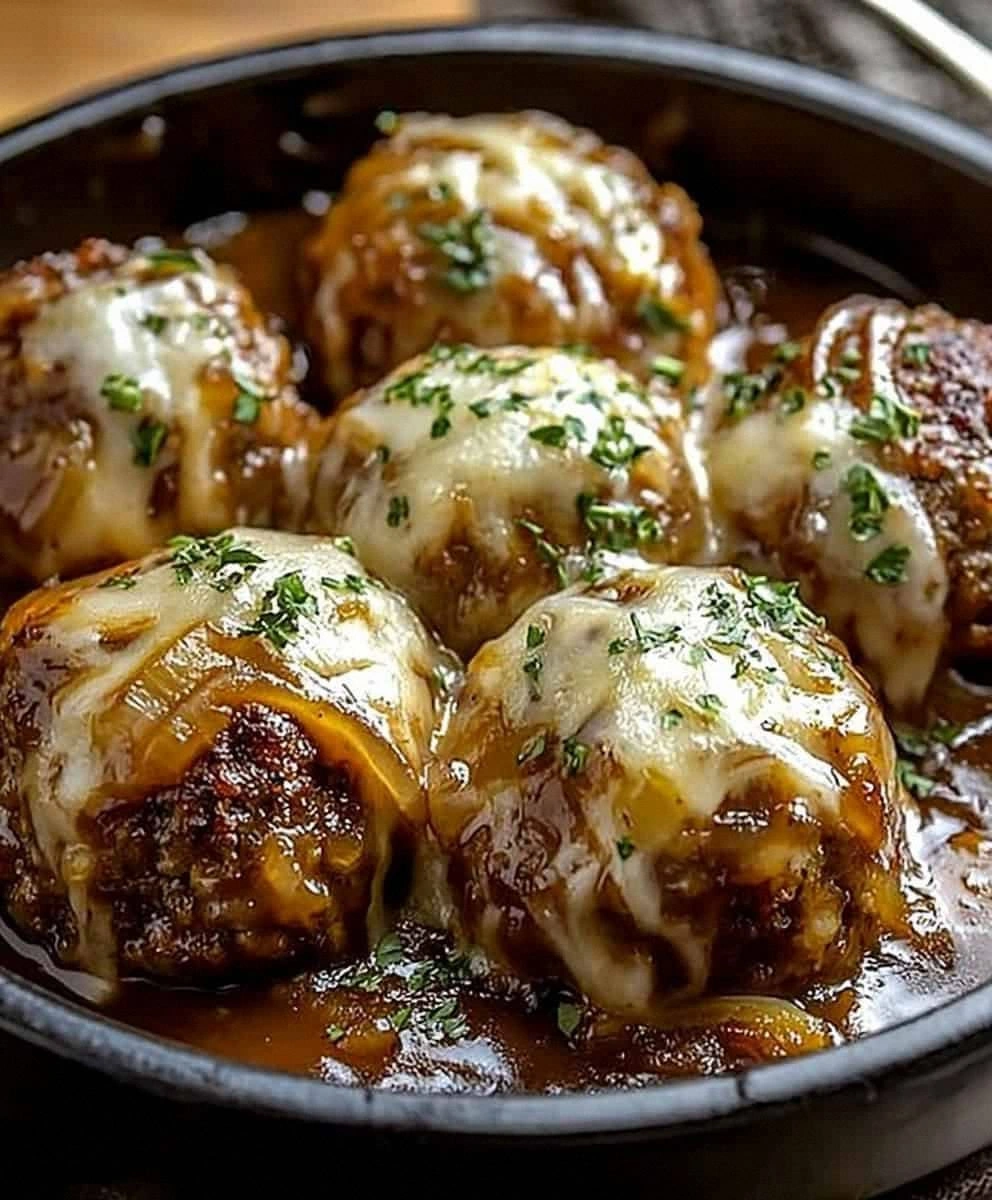
- Cheese Strategy: Instead of burying the cheese inside (where it can seize up into rubbery nuggets), we shower it on top at the end. Under the broiler, Gruyère melts into a stretchy, golden blanket that tastes like the top of French onion soup—because that's exactly the vibe we're chasing.
- One-Pan Simplicity: Sear, sauce, and finish everything in the same skillet. Fewer dishes means more time to bask in the compliments when everyone scrapes the pan clean.
- Make-Ahead Friendly: Caramelize the onions on Sunday, mix the meat on Monday, sear on Tuesday. Each component keeps beautifully, so you can assemble a restaurant-quality dinner faster than ordering takeout.
- Umami Bomb Broth: A 50-50 mix of beef broth and canned French onion soup concentrate gives you that slow-simmered depth in half the time. It's the shortcut that tastes like you spent all day at the stove.
Alright, let's break down exactly what goes into this masterpiece...
Inside the Ingredient List
The Flavor Base
Ground beef is the backbone, but reach for 80/20—not the lean stuff. Fat equals flavor and juiciness, and most of it renders out into the pan anyway, leaving behind tender meat and enough fat to sauté the onions in later. Ground pork adds subtle sweetness and keeps the texture delicate; skip it and you'll notice the meatballs feel heavier on the tongue.
Parmesan does double duty: salty depth inside the meatball and crackly frico edges where it hits the hot skillet. Don't use the pre-grated dust in the green can; it contains cellulose that can make the meatballs gummy. Grab a wedge and grate it yourself—your taste buds (and your arm muscles) will thank you.
The Texture Crew
Breadcrumbs aren't just filler—they're insurance against tough meat. They trap moisture and fat, expanding as the meat cooks, so your meatballs stay plush instead of springy. I like panko for its airy crunch, but plain supermarket crumbs work fine. No breadcrumbs? Tear up a slice of sandwich bread and soak it in a splash of milk for five minutes; that's the classic Italian panade trick.
The egg is the binder that keeps everything cohesive. Beat it well before adding so you don't get streaks of white in the mix. One large egg is perfect for this meat quantity; add a second and the meatballs can turn rubbery.
The Unexpected Star
Fresh parsley often gets relegated to garnish status, but here it's a flavor component. The herbal brightness cuts through all that richness, like a squeeze of lemon you didn't know you needed. Chop it finely so you don't get grassy clumps, and don't swap for dried—dried parsley tastes like faded lawn clippings.
Dried thyme and oregano are the quiet background singers. They add complexity without shouting "Italian seasoning!" A half teaspoon each is subtle; more than that and the meatballs start tasting like pizza.
The Final Flourish
Gruyère is the classic French onion soup topper for a reason: it melts like a dream, browns beautifully, and has that nutty, slightly funky depth. Can't find Gruyère without selling a kidney? Use Swiss Emmental or even a young fontina. Avoid pre-shredded cheese; the anti-caking agents prevent smooth melting.
Everything's prepped? Good. Let's get into the real action...
The Method — Step by Step
- Start with the onions: slice them pole-to-pole so they hold their shape during the long caramelization. Thin half-moons, about an eighth of an inch thick. Heat a heavy skillet over medium-low, add the butter and olive oil, and tumble in the onions with a pinch of salt. The salt draws out moisture and jump-starts the caramelization. Stir every few minutes; if they start to darken too quickly, splash in a tablespoon of water and lower the heat. You're aiming for a jammy, mahogany tangle—this takes about 25 minutes, so queue up a podcast and pour yourself something to sip.
- While the onions work their magic, mix the meat. In a large bowl, combine beef, pork, breadcrumbs, Parmesan, parsley, egg, garlic, salt, pepper, thyme, and oregano. Use your fingertips, not your palms; palms are warmer and can smear the fat, leading to dense meatballs. Gently toss everything until just combined—think salad, not bread dough. Over-mixing is the enemy of tenderness.
- Scoop and roll: a medium cookie scoop (about 1½ tablespoons) gives uniform size, which means even cooking. Roll gently between damp palms; wet hands prevent sticking and keep the surface smooth. Place them on a parchment-lined plate. You should get 24 to 26 meatballs. If you eat one raw at this stage, I won't tell—chef's prerogative—but I dare you to taste the caramelized onions and not go back for seconds.
- Sear for flavor: wipe out the onion skillet, crank it to medium-high, and add a whisper of oil. When it shimmers like a mirage, space the meatballs in a single layer. Don't crowd them; work in batches if necessary. Let them sit undisturbed for 90 seconds so a crust forms. Turn with tongs; you're looking for deep amber patches, not gray steamed blobs. Transfer to a plate—they'll finish in the sauce.
- Build the sauce in the same pan, scraping up the browned bits—those are flavor gold. Add the caramelized onions back in, pour the beef broth and French onion soup concentrate, and bring to a gentle simmer. The kitchen will start smelling like a Parisian bistro after a rainstorm. Nestle the meatballs into the liquid; they should be mostly submerged. Cover, reduce to low, and let them poach for 12 minutes.
- Cheese finale: heat your broiler to high. Uncover the skillet, scatter Gruyère over the top, and slide it under the flame. Stay close—this is the moment of truth. In 2 to 3 minutes the cheese will melt, bubble, and develop freckles of bronze. When it looks like the top of a perfect French onion soup, yank it out.
That's it—you did it. But hold on, I've got a few more tricks that'll take this to another level...
Insider Tricks for Flawless Results
The Temperature Rule Nobody Follows
Most recipes tell you to cook meatballs until "no longer pink," but that's vague and often leads to overcooking. Use an instant-read thermometer and pull them when the center hits 160°F. Carry-over heat will nudge them to a safe 165°F while they rest. The result? Juicy centers instead of sawdust.
Why Your Nose Knows Best
When the onions are properly caramelized, they'll smell like buttery maple rather than sharp sulfur. If your eyes are still stinging, keep going. The Maillard reaction turns harsh onion bite into mellow sweetness—trust your nose more than the clock.
The 5-Minute Rest That Changes Everything
After broiling, let the skillet sit for five minutes. The sauce thickens slightly, the flavors marry, and the cheese settles into a gooey blanket instead of lava that scalds your tongue. A friend tried skipping this step once—let's just say it didn't end well for the roof of his mouth.
Creative Twists and Variations
Mushroom & Swiss Forest Edition
Swap half the caramelized onions for sautéed cremini mushrooms and use Swiss instead of Gruyère. The earthiness of the mushrooms makes this taste like a ski-lodge supper after a day on the slopes.
Spicy Alsace
Add a pinch of smoked paprika to the meat and finish with a handful of crispy bacon crumbles. The smoky heat plays beautifully with the sweet onions and nutty cheese. If you like chili, you're not alone—and I've got the fix.
Green-Onion Garden
Fold a cup of finely chopped spinach into the meat and finish with crumbled goat cheese. The greens keep the meatballs moist, and the tangy goat cheese cuts through the richness like a spring breeze.
Little French Onion Sliders
Form the meat mixture into 1-inch balls, sear, and nestle into Hawaiian rolls with a spoonful of sauce and a square of Gruyère. Broil open-faced for 90 seconds. Party food that disappears faster than you can say "encore."
Vegetarian Umami Bomb
Replace meat with a 50-50 mix of finely diced mushrooms and lentils, swap beef broth for mushroom stock, and keep everything else the same. Even carnivores inhale these—I watched it happen at a potluck.
Breakfast Hash Comeback
Chop leftover meatballs and toss with diced potatoes, more caramelized onions, and a fried egg on top. Brunch that cures whatever happened the night before.
Storing and Bringing It Back to Life
Fridge Storage
Cool completely, then transfer to an airtight container with all the saucy onions spooned on top. They'll keep four days in the fridge, but good luck making them last that long. Reheat gently in a covered skillet with a splash of broth over medium-low until warmed through—about 8 minutes.
Freezer Friendly
Freeze the meatballs and sauce together in a freezer-safe bag laid flat so it thaws quickly. Squeeze out excess air to prevent ice crystals. They'll keep three months. Thaw overnight in the fridge, then reheat as above. The cheese should be added fresh during the final broil for maximum stretch.
Best Reheating Method
Microwaves murder texture. Instead, warm covered in a skillet with a tiny splash of water; the steam brings them back to life. Add fresh cheese and broil for that just-made vibe. Picture yourself pulling this out of the oven, the whole kitchen smelling incredible...