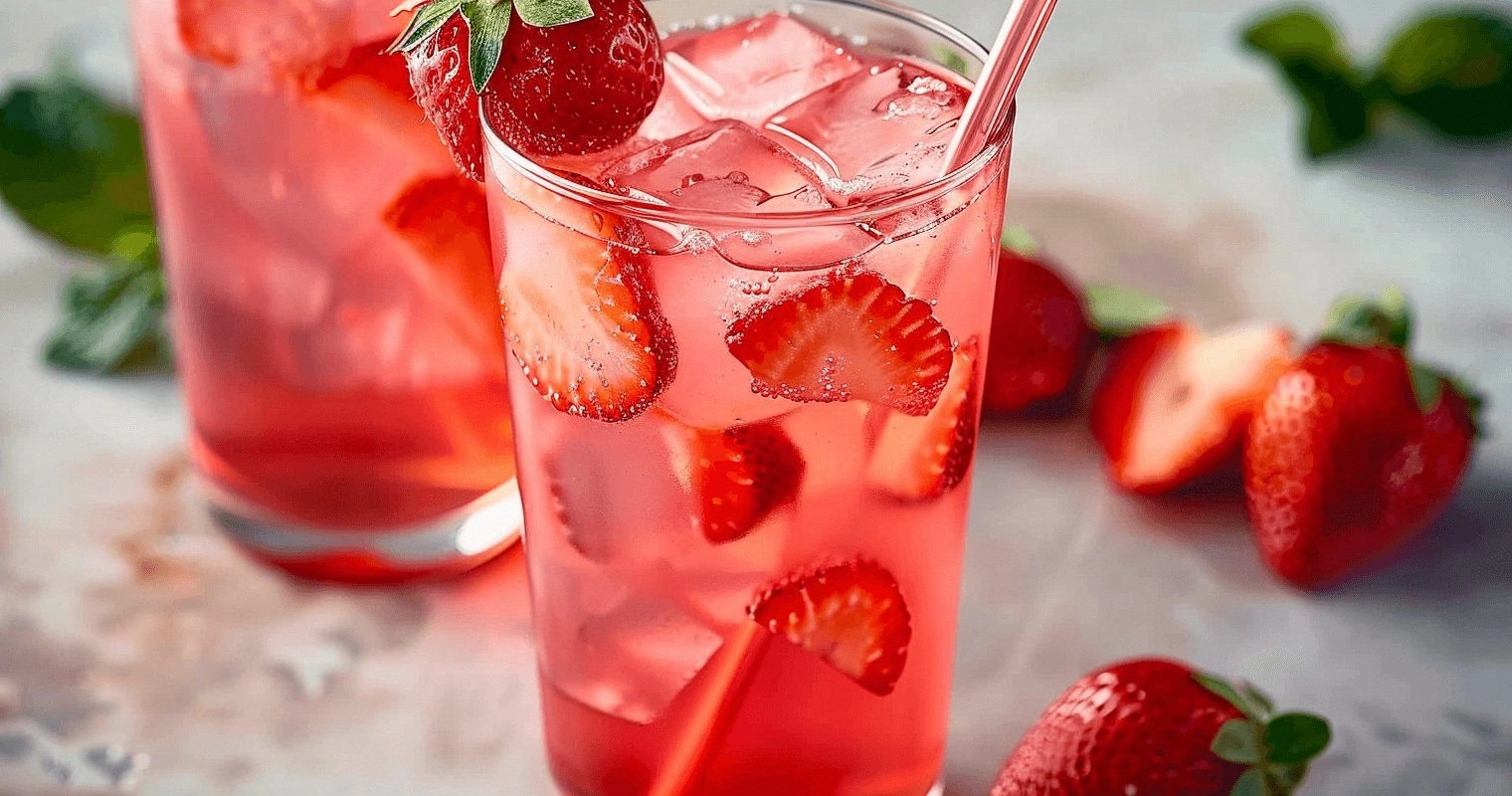
I still remember the day I swore off store-bought strawberry soda forever. It was a sticky July afternoon, the kind where the air feels like warm honey and even the ice cubes sweat. I’d cracked open a neon-pink bottle, taken one sip, and recoiled as if I’d been cat-fished by a corn-syrup-covered mannequin. Where were the berries? Where was the sparkle? Where was the soul? That moment haunted me for weeks—until I stormed into the kitchen, arms full of farmers-market strawberries, and declared war on artificial fizz. What followed was a three-day bender of simmering, muddling, carbonating, and taste-testing until my tongue felt like a disco ball. The result? A strawberry soda so alive it practically tap-dances on your palate: bright jammy berry notes up front, a crisp mineral backbone, and the most delicate bubble structure that foams like sea spray on pink granite. I’m talking summer in a glass, Fourth of July fireworks on your tongue, the giggle of a backyard sprinkler translated into liquid form. And the color—oh, the color—like a watercolor sunset bleeding across a paper sky, entirely courtesy of real fruit. I dare you to taste this and not go back for seconds. Actually, I double-dog-dare you, because I’ve yet to see anyone nurse a single bottle for longer than four minutes. Ready for the game-changer? Stay with me here—this is worth it.
Most recipes get strawberry soda completely wrong. They either cook the berries into murky mush, losing every whisper of fresh perfume, or they dump in so much sugar the drink tastes like bubble-gum left in a hot car. My version reverses the playbook: we cold-macerate half the fruit to preserve those top-note aromatics, then briefly steep the rest to deepen the bass line. We’re layering acidity like a symphony—lemon for zip, a pinch of sea salt to amplify sweetness without extra sugar, and a final squeeze of lime just before serving that snaps every flavor into 4K focus. The carbonation isn’t some angry, throat-burning fizz; it’s a gentle champagne-like effervescence that carries berry vapor straight into your sinuses. Picture yourself pulling this out of the fridge, condensation beading like diamonds on the glass, the faint hiss of bubbles whispering “drink me” in strawberry Morse code. Your kitchen smells like a field in Provence. Your dog is staring, tail wagging in sync with the bubbles. Even the ice cubes seem excited. Let me walk you through every single step—by the end, you’ll wonder how you ever made it any other way.
Before we dive in, full disclosure: I drank three bottles while writing this post. They kept winking at me from the fridge, and my willpower went out the window somewhere between paragraph two and the word “effervescence.” I’ll be honest—half the batch disappeared before anyone else got a look-in. My roommate walked in, saw the empty bottles lined up like pink soldiers, and asked if I’d hosted a toddler birthday I’d forgotten to mention. Nope, just a Tuesday. If you’ve ever struggled with water intake, you’re not alone—and I’ve got the fix. Strawberry soda is so hydrating it should come with its own wellness influencer contract. Okay, ready for the fun part? Grab your berries, your best pot, and let’s turn summer into something you can sip through a straw.
What Makes This Version Stand Out
Taste Explosion: This soda tastes like biting into a berry at peak ripeness, still warm from the sun, minus the seeds in your teeth. It’s a three-act play—frontal sweet berry, mid-palate tang, and a crisp mineral finish that leaves you thirsty for another sip.
Texture Wizardry: The bubbles are micro-fine, almost velvet, because we chill everything to within an inch of its life before carbonating. No harsh soda-stream sputter here—just a soft mousse that coats your tongue like silk.
Color Without Crayons: That electric ruby hue? One-hundred-percent fruit. We’ll strain out the pulp so the liquid glows like stained glass, but we’ll whisk in a spoonful of the purée at the end for body—no dyes, no beet shortcuts, no cheating.
Build-a-Bottle Flexibility: Want it drier? Cut the syrup. Sweeter? Add a ribbon of honey while it’s warm. Spike it with gin for a tipsy float, or keep it playground-friendly. The base is a blank canvas wearing strawberry perfume.
Pantry Minimalism: Five ingredients, not counting water. If you can boil water, you can make this. No fancy enzymes, no obscure extracts—just berries, sugar, citrus, salt, and bubbles.
Make-Ahead Magic: The syrup keeps two weeks in the fridge and freezes for six months. Mix a glass in under thirty seconds, or batch it for a barbecue and look like the host hero who planned ahead (even if you woke up five minutes before the guests arrived).
Crowd Reaction Guarantee: I’ve served this at toddler birthdays and cocktail soirées—both crowds lose their minds. One friend threatened to install a tap of it in her kitchen; another asked if I’d marry him, purely for access to the soda. Fair.
Inside the Ingredient List
The Flavor Base
Strawberries are the divas here—buy them like you’re choosing engagement rings. Look for smaller, darker berries: they pack more anthocyanin punch and perfume. If all you can find is the giant pale crew, roast them for ten minutes at 375°F to concentrate sugars. Skip berries that smell like refrigerator—nobody wants soda that tastes like forgotten lunchbox.
Cane sugar dissolves clean and lets fruit sing. Brown sugar muddies the color and adds molasses heft that fights the berry top notes. Honey works in a pinch, but use half the amount; its floral character can read bubble-gummy if you go heavy.
The Texture Crew
Water quality matters more than you think. If your tap water tastes like a swimming pool, filter it. Chlorine flattens aromatics the way a steamroller flattens dreams. I keep a jug of cold filtered water in the fridge so everything stays shocked awake.
Ice is not an afterthought. Those cloudy half-moon cubes from the freezer tray? They off-gas minerals and dilute your soda faster than a gossip dilutes truth. Use clear ice—boil water first, freeze in insulated molds, or buy a bag from the fancy cocktail store. Your bubbles will last longer and your Instagram photos will thank you.
The Unexpected Star
A single tiny pinch of flaky sea salt is the secret handshake between sweet and savory. It sharpens berry flavor the way a comma sharpens a sentence—almost invisible, but you miss it when it’s gone. Don’t use iodized table salt; it can read metallic. Maldon, fleur de sel, or even kosher—just a whisper.
The Final Flourish
Lemon juice adds snap, but lime juice adds mystery. I use both: lemon while the syrup is warm to brighten, lime right before serving to lift. Think of lemon as stage lights and lime as the follow-spot that finds the soloist. Together they make the berry flavor feel three-dimensional.
Everything’s prepped? Good. Let’s get into the real action...
The Method — Step by Step
- Rinse and hull one pound of strawberries. Set aside the prettiest third—about five ounces—on a paper towel; these will be your raw perfume later. Chop the rest into rough chunks so they look like ruby gravel. You want exposed flesh to maximize syrup extraction, but don’t pulverize them into baby food or you’ll fight pulp through a cheesecloth later.
- Toss the chopped berries into a bowl with half a cup of sugar and the zest of half a lemon. Stir until every shard glistens like stained glass, then cover and refrigerate for two hours. This cold maceration draws out juice without heat, preserving those bright top notes that smell like pink laughter. If you’re impatient, one hour works, but two hours gives you that candied syrup at the bottom worth licking off the spoon.
- While the berries weep, make your clear ice. Boil four cups of water, let it cool to room temp, then freeze in large molds. The slower freeze pushes air bubbles out, leaving glassy blocks that won’t murder your carbonation. I use a small cooler with the lid off; the directional freeze works like magic and makes me feel like a backyard glacier sculptor.
- After maceration, scrape the ruby slurry into a saucepan and add another quarter-cup of sugar, two tablespoons of lemon juice, and that flirtatious pinch of sea salt. Bring to the gentlest simmer—barely a burble—over medium-low heat. Swirl, don’t stir, so the sugar doesn’t crystallize on the sides. In five minutes the kitchen will smell like a strawberry field in midsummer, and the syrup will go from opaque to translucent crimson. Don’t walk away; berries foam like a bubble bath when they’re excited.
- Remove from heat, cover, and let it steep for fifteen minutes. This post-heat nap allows the fruit to surrender the last of its pigment without overcooking. Meanwhile, take your reserved raw berries and blitz them in a blender for five seconds—just enough to make a chunky purée. We’re after flecks, not smoothie. Fold this raw purée into the cooled syrup for a hit of just-picked vibrancy.
- Strain the mixture through a fine-mesh sieve into a measuring cup, pressing gently with a spatula. You should end up with about one cup of glossy syrup the color of opera lipstick. Don’t mash the pulp through; we want clarity so light can dance in the glass. The leftover pulp makes outrageous yogurt swirls or toaster-ice-cream sandwiches, so hoard it like treasure.
- Chill the syrup in an ice bath until it’s colder than your ex’s heart—about 40°F. Cold liquid holds more CO₂, so this step is non-negotiable if you want bubbles that snap. While you wait, fill a swing-top bottle with cold filtered water and refrigerate that too. Everything must feel like February.
- When both syrup and water are icy, assemble your soda: two tablespoons of syrup in a tall glass, eight ounces of cold water, and a quick stir. Now the fun part—carbonate. If you own a siphon, charge with one CO₂ cartridge, give it a gentle roll, and let it rest thirty seconds. No siphon? Pour the mix into a plastic soda bottle, leaving two inches of headspace, screw the cap, and hook it to a home carbonation rig. Hit it with gas, shake like you’re auditioning for a cocktail video, then chill upright for ten minutes so the CO₂ locks in.
- Serve over clear ice with a final squeeze of lime. The first sip should taste like a strawberry doing cartwheels—sweet, tart, effervescent, and gone in a blink. If it’s too sweet, add a splash of cold water; too tame, another squeeze of citrus. Garnish with a small berry slit and perched on the rim, or go full drama with a mint sprout that brushes your nose every time you sip.
That’s it—you did it. But hold on, I’ve got a few more tricks that’ll take this to another level...
Insider Tricks for Flawless Results
The Temperature Rule Nobody Follows
Carbon dioxide dissolves better at 34°F than at 40°F, and twice as well as at 50°F. That six-degree difference is the line between a soda that prickles and one that fizzles out like bad fireworks. Keep your syrup, water, and glassware in the coldest part of the fridge, not the door. If you’re serving outdoors, nest the bottle in an ice bucket with a 3:1 ice-to-water ratio; the water fills air gaps and chills faster than ice alone. I learned this the hard way at a picnic where my soda went flat faster than the conversation.
Why Your Nose Knows Best
Before sweetening, smell the raw berries. If they don’t perfume the air within a six-inch radius, they’re not ready. Strawberries don’t ripen off the plant—they just soften and rot. Buy fragrant or go home. And if you’re stuck with supermarket duds, add a drop of rosewater to fake the aroma. It’s like strawberry Instagram filters for your olfactory bulb.
The 5-Minute Rest That Changes Everything
After carbonating, let the bottle sit upright five minutes before opening. CO₂ needs time to distribute evenly; otherwise you get a violent rush of gas that strips bubbles away. Think of it as letting a steak rest—except instead of juice, you’re locking in sparkle. A friend tried skipping this step once; let’s just say it didn’t end well for her white jeans.
Creative Twists and Variations
This recipe is a playground. Here are some of my favorite ways to switch things up:
Rhubarb-Strawberry duet
Swap out a third of the berries for chopped rhubarb. The pink stalks bring a cheeky tartness that makes the strawberry taste even sweeter by contrast. Add an extra two tablespoons of sugar to balance rhubarb’s sass. The resulting soda tastes like a pie doing cannonballs in a pool.
Spicy Berry Pop
Drop a coin-sized slice of fresh jalapeño into the warm syrup for three minutes, then remove. The capsaicin adds a slow heat that blooms at the back of your throat, turning innocent strawberry into femme-fatale. Serve with a Tajín-rimmed glass for full drama.
Cream Soda Swirl
Top the finished soda with an inch of cold half-and-half poured slowly over the back of a spoon. The acid curdles slightly, creating pink clouds that taste like melted ice cream. It’s essentially a melted strawberry shortcake you can slurp. Kids call it “pink storm” and request it on repeat.
Sparkling Rosé Remix
Replace half the water with a chilled dry rosé before carbonating. The wine’s berry notes marry the syrup, and the alcohol level stays low enough for backyard afternoons without naps. Garnish with edible rose petals and pretend you’re in Provence even if you’re in a studio apartment.
Sugar-Free Electro-Boost
Sub erythritol or allulose for cane sugar, and add a pinch of powdered magnesium and potassium. The electrolytes make it a sports drink that doesn’t taste like crushed vitamins. Perfect for post-yoga glow or marathon Zoom calls.
Smoked Berry Soda
Cold-smoke the strawberries for twenty minutes before maceration. The gentle haze adds campfire nostalgia without overwhelming freshness. Serve in enamel mugs for full lumberjack vibes, even if the closest you’ve been to a forest is a phone wallpaper.
Storing and Bringing It Back to Life
Fridge Storage
Keep syrup in a sterilized swing-top bottle or mason jar, refrigerated, up to two weeks. Press plastic wrap directly onto the surface to prevent oxidation browning. The flavor is brightest in the first week, but it still trounces anything from the supermarket at day fourteen. If it starts to smell like wine, you’ve hit fermentation—either enjoy the accidental berry champagne or dump it and vow to label dates next time.
Freezer Friendly
Pour cooled syrup into ice-cube trays; once solid, pop cubes into a zip-top bag. They keep six months and melt perfectly into future glasses. One cube equals two tablespoons—no math required before coffee. You can also freeze the fully mixed soda in popsicle molds for fizzy fruit-sicles that crunch like snow cones.
Best Reheating Method
If the soda goes flat, revive it by re-carbonating rather than adding more syrup. Pour back into a chilled siphon, charge again, and rest five minutes. Adding extra syrup just makes it cloying. For single glasses, a whipped-cream charger fitted with a soda tip gives instant sparkle without re-batching the whole bottle.