Love this? Pin it for later! 📌
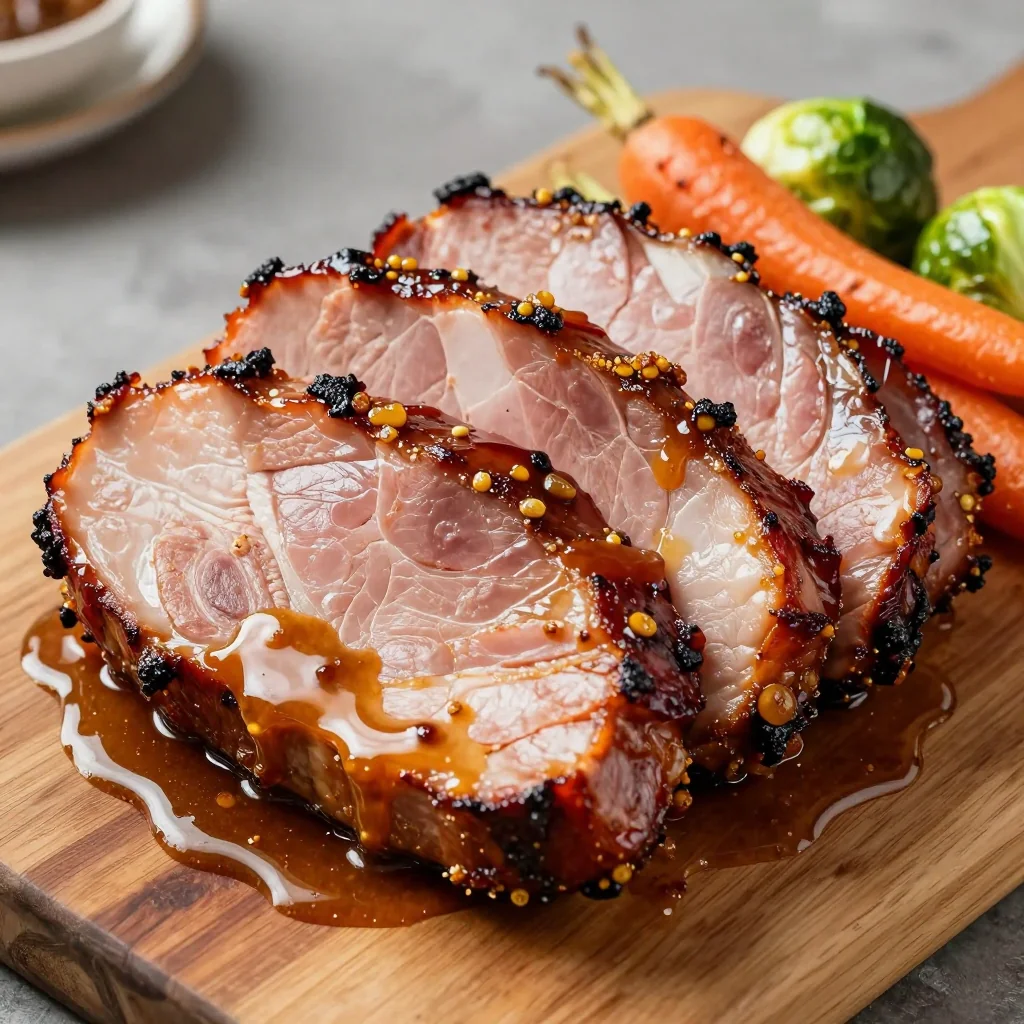
When I was growing up, the scent of a glossy, caramel-brown ham emerging from my grandmother’s avocado-green oven meant one thing: the whole family was about to squeeze around her walnut dining table for a holiday feast. She’d baste that ham every twenty minutes like clockwork, humming carols while the brown-sugar-mustard glaze bubbled and hissed against the roasting pan. Years later, when I volunteered to host Easter brunch for the first time, I called her in a panic—how do you choose a ham? How do you keep it juicy? And what makes that glaze so irresistibly sticky? She laughed and said, “Honey, the secret is patience, a good-quality bone-in ham, and enough mustard to balance the sweet.” Since that phone call, I’ve baked more hams than I can count—sometimes for Thanksgiving, sometimes for a random Sunday when I want the house to smell like a Norman Rockwell painting—and her advice has never failed me. This recipe is my streamlined, twenty-first-century version of her classic: the same mahogany crust, the same sweet-tangy balance, but written for busy cooks who want fool-proof results on the first try. Whether you’re carving it thin for biscuits, cubing it for mac and cheese, or serving it center-stage with scalloped potatoes, this baked ham will become the tradition your future grandchildren remember.
Why This Recipe Works
- Low-and-slow heat keeps the ham succulent while the glaze lacquers without burning.
- Double-glaze technique builds layers of flavor—one coat to season, a second to shine.
- Whole-grain mustard cuts the sweetness and adds sophisticated pops of seed.
- Natural juices mingle with glaze to create an effortless pan sauce—no extra skillet needed.
- Score-and-clove step perfumes the meat while allowing glaze to seep into every cranny.
- Built-in leftovers taste even better in sandwiches, soups, and breakfast hashes.
Ingredients You'll Need
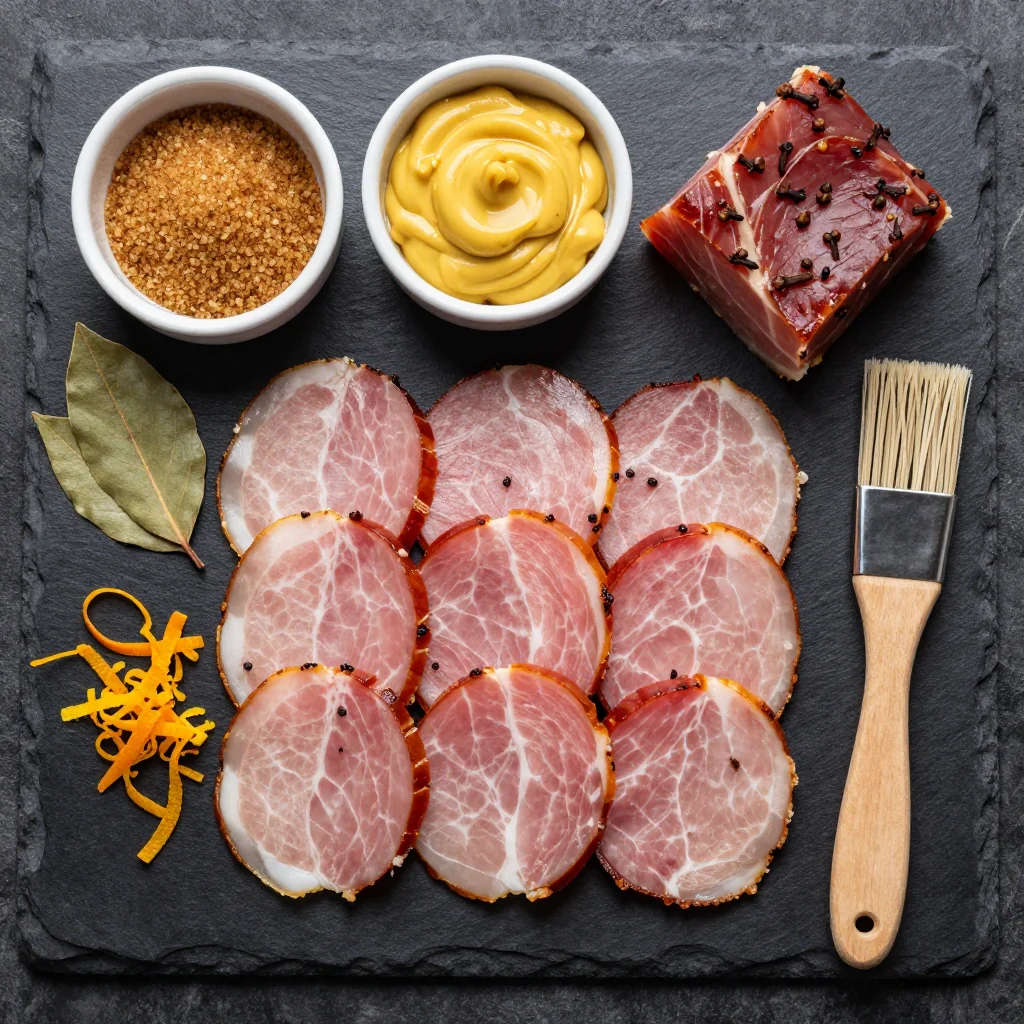
Great ham starts at the butcher counter. Look for a bone-in, skinless, fully cooked (sometimes labeled “city”) ham in the 7–9 lb range; the bone seasons the meat from the inside and makes killer bean soup later. If you need to feed a crowd, choose the shank half for easier carving, or the butt half for meatier (though slightly trickier-to-slice) portions. Avoid “picnic” hams—they’re delicious but come from the shoulder and require different timing.
Dark brown sugar is non-negotiable here; its molasses undertone deepens color and flavor. Light brown sugar works in a pinch, but you’ll miss that toffee richness. Buy freshly packed sugar—if your box has been open since last December, the moisture will have evaporated and the glaze will crystallize.
Whole-grain Dijon mustard gives you tangy seeds that pop between your teeth. Smooth Dijon can substitute, but you’ll lose texture. Vegetarians in the house? Maille or Grey Poupon both make vegan versions without honey.
Pure maple syrup thins the glaze so it brushes on evenly. Skip pancake syrup; its corn-syrup base scorches at high heat. Grade A Amber is plenty flavorful and easier to find than the darker Grade B.
Apple cider vinegar brightens all that sweet richness. In its place you can use white wine vinegar or even fresh orange juice—just keep the acid in there to balance the sugar.
Ground cloves amplify the whole cloves you stud into the ham; a little pinch warms the entire dish. If you’re sensitive to spice, halve the quantity.
Butter adds silky body so the glaze clings instead of dripping straight into the pan. Unsalted is best—you’ll season the ham separately.
How to Make Baked Ham with a Brown Sugar and Mustard Glaze
Rest, Score, and Preheat
Remove ham from refrigerator 90 minutes before baking so it comes to room temperature—cold meat contracts and squeezes out moisture. Meanwhile, position rack in lower third of oven and preheat to 275 °F (135 °C). Pat ham dry with paper towels; moisture on the surface blocks glaze adhesion. Using a sharp knife, score a 1-inch-wide diamond pattern across the fat cap, cutting just until you see the meat (about ¼ inch deep). Press a whole clove into each intersection for old-school aroma and picture-perfect presentation.
Foil Tent First Roast
Place ham cut-side down in a heavy roasting pan. Add 1 cup water to the pan (this creates steam for gentle heat). Cover pan tightly with two layers of foil, crimping around edges so no steam escapes. Bake 12 minutes per pound (roughly 1 hour 45 minutes for an 8-lb ham). Internal temp should reach 100 °F when probed near the bone.
Mix the Brown Sugar–Mustard Glaze
While ham roasts, whisk 1 cup packed dark brown sugar, ½ cup whole-grain Dijon, ¼ cup maple syrup, 2 Tbsp apple cider vinegar, 1 tsp ground cloves, and 3 Tbsp melted butter in a small saucepan. Warm over low heat just until sugar dissolves and mixture is glossy, 3–4 minutes. Remove from heat; glaze will thicken slightly as it cools.
First Brush and Crank the Heat
Remove foil; discard pan juices (or save for soup). Increase oven to 375 °F (190 °C). Brush ham with one third of the glaze, forcing it into every knife cut so the sugar can seep inside. Return to oven uncovered.
Layer, Baste, Repeat
Every 10 minutes, brush on more glaze. The sugar will melt and slowly encrust the ham. Continue until glaze is gone and surface is burnished, about 30 minutes total. Watch closely during the final pass—brown sugar moves from caramel to bitter quickly.
Rest and Carve
Transfer ham to cutting board; tent loosely with the same foil and rest at least 20 minutes (up to 45). Resting lets juices redistribute so slices stay juicy. Cut vertically to the bone, then run knife horizontally underneath slices to free them. Serve with extra pan juices spooned on top.
Expert Tips
Use an Instant-Read Thermometer
City hams are already cured and safe to eat cold; you’re reheating for best texture. Aim for 120 °F internal for slices that hold together, 130 °F if you like it fork-tender.
Deglaze the Pan
Pour ½ cup broth or white wine into the hot pan, scrape with wooden spoon, and simmer 2 minutes for an instant au-jus—no extra salt needed thanks to the ham drippings.
Slice Against the Grain
Locate the natural muscle lines and cut perpendicular for short, tender fibers. A long slicing knife or electric knife prevents ragged edges.
Save the Bone for Soup
Freeze the bone with 1 cup meat clinging to it. Simmer later with beans and greens for an effortless weeknight dinner that tastes like it cooked all day.
Make-Ahead Slices
Carve the entire ham once cooled, layer slices with parchment in an airtight container, and refrigerate up to 5 days. Reheat portions in skillet with a splash of apple juice.
Glaze Guard
If edges brown too fast, fold a 3-inch strip of foil into an L-shape and prop it over the skinny end like a tent wall—this deflects direct heat without steaming.
Variations to Try
- Spiced Orange: Swap maple syrup for orange marmalade and add ½ tsp cardamom for a citrusy perfume.
- Honey-Chipotle: Replace brown sugar with honey and whisk 1 tsp chipotle powder into glaze for smoky heat.
- Pineapple-Bourbon: Substitute ¼ cup pineapple juice for maple syrup and add 2 Tbsp bourbon; baste with crushed pineapple in final 10 minutes.
- Low-Sugar Keto: Use brown-sugar monk-fruit blend and sugar-free maple syrup; add 1 tsp xanthan gum to thicken.
Storage Tips
Refrigerate: Wrap carved ham tightly or store in shallow covered container up to 5 days. Pour a spoonful of pan juices over slices before sealing to keep them moist.
Freeze: Place 1-cup portions in freezer bags, squeeze out air, label, and freeze flat up to 2 months. Thaw overnight in refrigerator; reheat gently to avoid rubbery texture.
Make-Ahead Entire Ham: Bake, cool, carve, and refrigerate up to 3 days ahead. To serve, wrap whole slices in foil with ¼ cup broth and reheat at 300 °F for 20 minutes.
Frequently Asked Questions
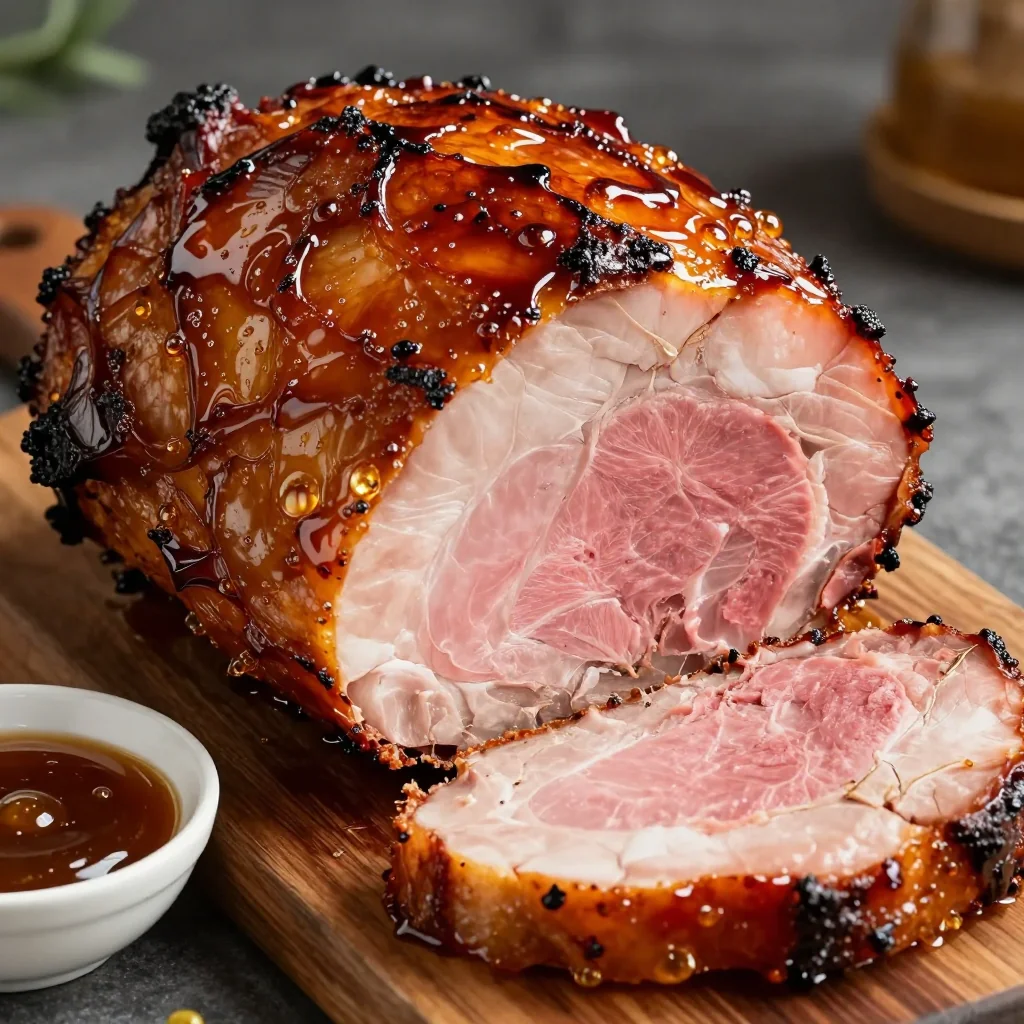
Baked Ham with a Brown Sugar and Mustard Glaze
Ingredients
Instructions
- Rest and Score: Let ham stand 90 minutes. Preheat oven to 275 °F. Score fat in 1-inch diamonds; stud each crossing with a whole clove.
- Initial Roast: Place ham cut-side down in roasting pan; add 1 cup water. Cover tightly with foil. Bake 12 min/lb (internal 100 °F).
- Make Glaze: Whisk brown sugar, mustard, maple syrup, vinegar, ground cloves, and melted butter over low heat until glossy.
- First Glaze: Increase oven to 375 °F. Remove foil; brush ham with one third of glaze. Roast uncovered.
- Build Layers: Brush remaining glaze on every 10 minutes for 30 minutes total until sticky and mahogany.
- Rest and Serve: Tent loosely with foil; rest 20 minutes. Carve and spoon pan juices over slices.
Recipe Notes
Leftovers keep 5 days refrigerated or 2 months frozen. Save the bone for split-pea soup!