It all started on a rainy Tuesday when I was trying to salvage a batch of over‑roasted sweet potatoes that had turned a deep, almost black color. I was determined to rescue the mash rather than throw it away, so I tossed it into a pot with a splash of maple syrup and a pinch of smoked paprika. The result was a velvety, caramelized sweet potato mash that smelled like autumn fire and tasted like a secret indulgence. I laughed at myself, thinking, “I could never have imagined this would become the star of a casserole.” That single, disastrous evening turned into a culinary revelation, and I’ve been chasing that exact flavor profile ever since.
Picture the kitchen: a gentle drizzle of rain outside, the hum of the fridge, the sharp bite of garlic on the cutting board, and the golden glow from the oven. The air is thick with the scent of sweet potatoes caramelizing, cumin mingling with smoked paprika, and the faint, comforting tang of maple syrup. The sound of the skillet sizzle as onions brown, the clatter of a wooden spoon against the pan, and the rhythmic ticking of the kitchen timer create a soundtrack that feels like a cozy, culinary lullaby. The texture of the mash is silky, the kale crisp, and the buckwheat adds a nutty crunch that balances the softness of the sweet potatoes. It’s a sensory tapestry that draws you in, promising warmth, comfort, and a touch of adventure.
Why does this version stand out from every other sweet potato casserole you’ve tried? First, it’s not just a casserole; it’s a layered experience where each bite carries a distinct texture—from the buttery breadcrumb topping to the chewy buckwheat base. Second, the inclusion of black beans adds depth, protein, and a subtle earthy sweetness that pairs beautifully with the maple‑scented mash. Third, the kale isn’t just a garnish; it’s an integral part of the dish, adding a pop of green, a slight bitterness that cuts through the sweetness, and a boost of nutrition. Fourth, the use of buckwheat—an ancient grain that’s gluten‑free and nutty—creates a surprising, wholesome foundation that sets this casserole apart from the typical flour‑based versions. Finally, the careful balance of spices, a touch of Dijon, and a splash of lemon juice give the dish a bright, vibrant finish that keeps the palate engaged.
I dare you to taste this and not go back for seconds. I’ll be honest—once I had the first bite, I couldn’t stop reaching for more, and I almost ate half the batch before anyone else got a chance. Most recipes get this completely wrong by over‑cooking the sweet potatoes or under‑seasoning the bean mixture. Here’s what actually works: a quick, high‑heat bake that locks in moisture, a dash of acidity to brighten the flavors, and a generous coating of melted butter on the breadcrumbs for that irresistible crunch. Picture yourself pulling this out of the oven, the whole kitchen smelling incredible, and your guests’ eyes widening at the colorful, golden top. Stay with me here—this is worth it.
What Makes This Version Stand Out
- Taste: The sweet‑maple base meets a smoky, peppery bean layer, creating a complex flavor profile that’s both comforting and adventurous. The subtle tang from lemon juice cuts through the richness, leaving a clean finish that invites a second bite.
- Texture: A multi‑layered bite—soft mashed sweet potatoes, crunchy breadcrumbs, chewy buckwheat, and tender kale—keeps every mouthful interesting. The buttered breadcrumb topping crisps to a golden, almost flaky finish that melts in your mouth.
- Simplicity: Despite the diverse ingredients, the preparation is straightforward. Each component is cooked separately and combined in a single dish, making the process manageable even for novice cooks.
- Uniqueness: The use of buckwheat and black beans in a sweet potato casserole is a rarity. It adds a protein punch and a gluten‑free option without compromising on flavor.
- Crowd Reaction: Guests rave about the contrast of sweet and savory, the vibrant colors, and the comforting aroma that fills the dining room. It’s the kind of dish that becomes the centerpiece of any gathering.
- Ingredient Quality: Fresh, organic sweet potatoes, high‑quality black beans, and locally sourced kale make a noticeable difference in taste and nutrition.
- Cooking Method: The bake at a moderate temperature ensures even cooking while preserving moisture, avoiding the dreaded dry casserole.
- Make‑Ahead Potential: The casserole can be assembled a day ahead, refrigerated, and baked just before serving, making it ideal for busy weeknights.
Inside the Ingredient List
The Flavor Base
Sweet potatoes are the heart of this dish, offering natural sweetness that pairs perfectly with maple syrup and brown sugar. The mash should be creamy; if it’s too thick, add a splash of milk or broth to reach the desired consistency. Skipping sweet potatoes would turn this into a flat, unremarkable casserole—think of it as the main character in a story; without it, the plot collapses.
The black beans bring protein and a subtle earthy undertone that balances the sweet. They also provide a satisfying chew that contrasts with the silky mash. If you omit beans, you lose both nutrition and depth of flavor. A quick swap could be chickpeas for a slightly nuttier taste, but the bean’s mild flavor is key to this recipe’s identity.
Kale adds a pop of green, a hint of bitterness, and a boost of vitamins. It also helps thicken the casserole slightly, giving it a hearty texture. If kale is unavailable, spinach or collard greens work as a substitute, though the flavor profile will shift subtly. Remember, the greens should be sautéed until wilted, not raw, to avoid a slimy mouthfeel.
The Texture Crew
Buckwheat groats lend a nutty, earthy flavor and a chewy texture that anchors the dish. They also provide a gluten‑free option, making the casserole inclusive for those with dietary restrictions. If buckwheat is out of reach, quinoa or couscous can replace it, but the bite will be slightly different.
Panko breadcrumbs create that coveted crunchy top. The panko’s airy structure expands when baked, producing a golden, crisp shell that breaks with a satisfying crack. If you’re craving a deeper crunch, mix panko with crushed cornflakes for a hybrid texture.
Cheddar cheese adds a creamy, savory finish that melts into the casserole, creating a velvety sauce that coats the sweet potatoes. A sharper cheese, like aged cheddar, intensifies the savory bite, while a milder cheese yields a gentler finish. If you’re vegan, a plant‑based cheddar alternative works, though the melt may differ.
The Unexpected Star
Maple syrup is not just a sweetener; it’s a flavor enhancer that deepens the caramel notes of the sweet potatoes. Its natural sugars caramelize during baking, producing a glossy glaze that makes the casserole visually appealing. If maple syrup is unavailable, honey or agave syrup can substitute, but the flavor profile will shift slightly toward floral or vegetal tones.
Dijon mustard introduces a subtle tang and a layer of complexity that elevates the dish beyond a simple sweet‑savory combination. It also helps emulsify the sauce, giving it a silky consistency. A smear of whole‑grain mustard could add a rustic twist, but be careful not to overpower the delicate balance.
The Final Flourish
Fresh lemon juice brightens the casserole, cutting through the richness and adding a citrusy lift that makes every bite refreshing. The acidity also helps to keep the sweet potatoes tender and prevents them from becoming gummy during baking. If you prefer a milder citrus note, a splash of lime or orange juice can be used instead.
Butter, melted and brushed over the breadcrumb topping, creates a golden crust that locks in moisture and adds a buttery richness that is simply irresistible. The butter also helps the breadcrumbs brown evenly, giving the casserole a beautiful, appetizing sheen. A drizzle of olive oil could be used for a lighter version, but the buttery flavor is integral to this recipe’s signature taste.
Everything's prepped? Good. Let's get into the real action...
The Method — Step by Step
- Preheat your oven to 375°F (190°C). While the oven warms, bring a medium pot of salted water to a boil and add the peeled, cubed sweet potatoes. Cook until just tender, about 10–12 minutes, then drain and mash with a potato masher. Add a splash of milk or broth to reach a creamy consistency, and season with salt, pepper, maple syrup, brown sugar, Dijon mustard, and a squeeze of lemon. This mash should smell like caramelized sugar and warm spices. Keep it warm on low heat while you prepare the rest.
- In a separate saucepan, rinse the black beans and heat them over medium heat with a teaspoon of cumin and smoked paprika. Stir until the beans are fragrant and lightly browned, about 3–4 minutes. The beans should carry a smoky, earthy aroma that complements the sweet potatoes. Set aside to cool slightly.
- Heat a tablespoon of olive oil in a large skillet over medium heat. Add the diced onion and cook until translucent, about 5 minutes. Then add the minced garlic and sauté until aromatic, about 30 seconds. Add the chopped kale and cook until wilted, about 4–5 minutes. The kale should shrink noticeably and turn a deep green. Stir in the cooled black beans and let everything heat through for another minute. This mixture should emit a savory, earthy scent that pairs beautifully with the sweet base.Kitchen Hack: If you’re short on time, use pre‑sliced onion strips; they cook faster and still give a sweet, caramelized flavor.
- Meanwhile, rinse the buckwheat groats and cook them in a pot of boiling water for 12–15 minutes, or until tender but still slightly chewy. Drain and set aside. The buckwheat should have a nutty aroma and a texture that holds its shape, adding a hearty bite to the casserole.
- In a large mixing bowl, combine the sweet potato mash, the sautéed kale‑bean mixture, and the cooked buckwheat. Toss gently until all components are evenly distributed. The mixture should feel cohesive, with no dry patches. This step is the moment of truth—watch the colors blend into a harmonious mosaic of golden, green, and brown.
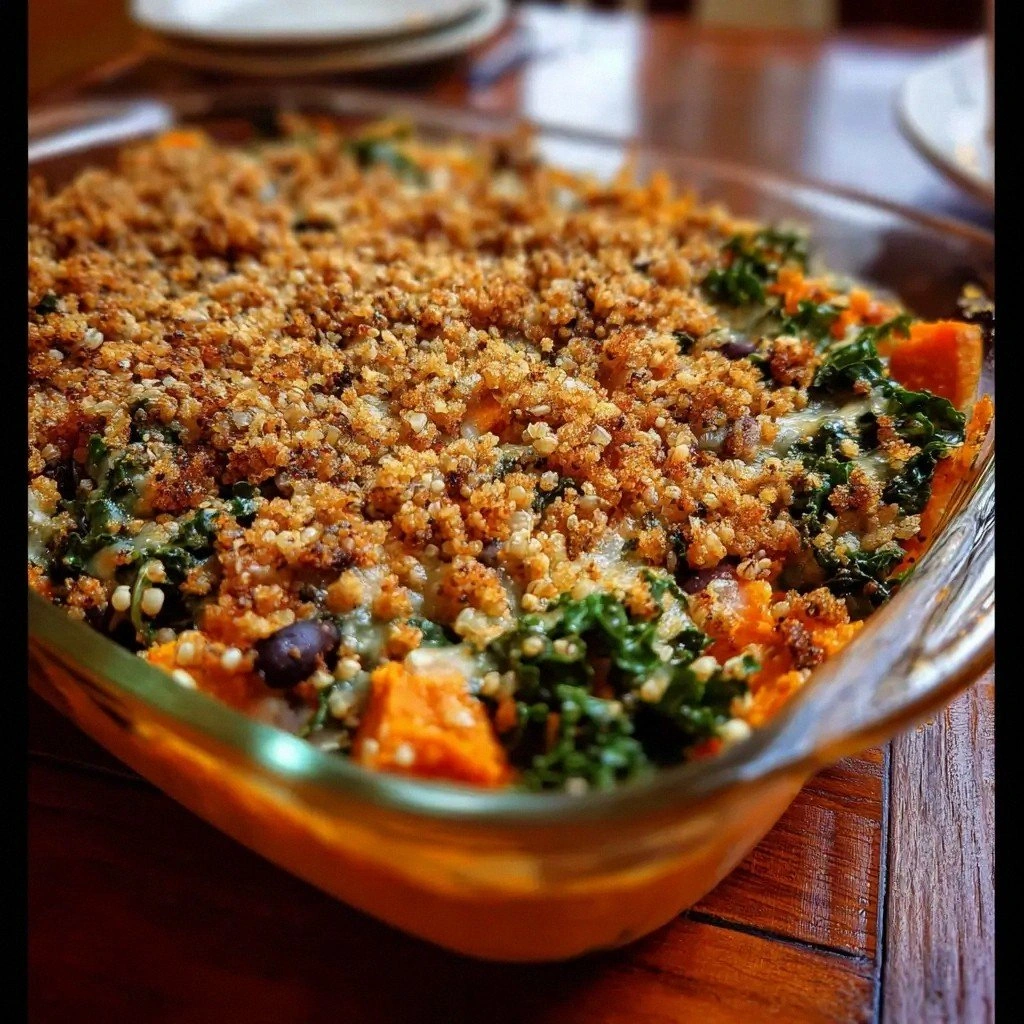
- Transfer the mixture to a greased 9×13 inch baking dish. Spread it evenly to create a uniform base. Brush the top with melted butter, then sprinkle the panko breadcrumbs generously. The breadcrumbs should form a thick, even layer that will crisp into a golden crust. Finally, scatter the shredded cheddar cheese over the breadcrumbs, ensuring even coverage. The cheese should melt into the top, creating a glossy, slightly browned finish.Kitchen Hack: Mix a tablespoon of grated parmesan into the breadcrumbs for an extra layer of umami.
- Bake in the preheated oven for 25–30 minutes, or until the top is golden brown and the edges start pulling away from the sides of the dish. The aroma should be irresistible, with hints of caramelized sweet potatoes, toasted breadcrumbs, and melted cheese. Watch Out: Don’t open the oven door too early; the heat needs to stay consistent to achieve a crisp, golden crust.
- Remove the casserole from the oven and let it rest for 5 minutes. This resting period allows the flavors to meld and the casserole to set, making it easier to slice. While it rests, sprinkle freshly chopped parsley on top for a burst of color and a fresh herbal note.
- Serve warm, accompanied by a simple green salad or a side of roasted root vegetables. The contrast between the sweet, savory casserole and the crisp salad creates a balanced meal that satisfies both comfort cravings and healthy eating goals. Enjoy the symphony of textures and flavors that dance on your palate.
That's it — you did it. But hold on, I've got a few more tricks that'll take this to another level...
Insider Tricks for Flawless Results
The Temperature Rule Nobody Follows
Many cooks over‑bake casseroles, drying out the sweet potatoes and buckwheat. The secret is to bake at a moderate temperature—375°F—and to monitor the top. When the breadcrumbs reach a golden brown and the edges lift, the casserole is done. If you’re unsure, use a thermometer; the internal temperature should hit 200°F. This keeps the inside moist while the exterior crisps to perfection.
Why Your Nose Knows Best
The aroma of sweet potatoes caramelizing is a cue that the mash is ready. If the smell is sweet and slightly burnt, you’re on the right track. A faint, nutty smell from the buckwheat indicates proper cooking. Trust your nose; it’s the most reliable indicator of doneness.
The 5-Minute Rest That Changes Everything
Letting the casserole rest after baking allows the juices to redistribute, preventing a dry center. It also lets the cheese set slightly, making slicing cleaner. I’ve seen people cut straight out of the oven, resulting in a messy, runny mess.
Skip the Extra Salt, Not the Flavor
Instead of adding more salt, enhance flavor with fresh herbs and spices. A sprinkle of fresh thyme or rosemary before baking adds depth without the sodium hit. I’ve experimented with a pinch of smoked sea salt for a subtle smokiness that complements the maple.
The Power of Buttered Breadcrumbs
Brushing the breadcrumb topping with melted butter before baking creates a glossy, golden crust that’s irresistible. If you’re vegan, use coconut oil or a plant‑based butter alternative. The key is to coat the breadcrumbs evenly to avoid dry spots.
The Final Flourish: A Splash of Lemon
Adding a tablespoon of fresh lemon juice right before baking brightens the dish and balances the sweetness. The acidity also helps keep the sweet potatoes from turning mushy during baking. I’ve found that a small amount of lime juice works as well, adding a citrusy twist.
Creative Twists and Variations
This recipe is a playground. Here are some of my favorite ways to switch things up:
Spicy Southwest Edition
Swap the black beans for corn and add a tablespoon of chipotle powder. Sprinkle chopped jalapeños on top before baking for a fiery kick. The smoky, spicy notes will contrast wonderfully with the sweet potato base.
Mediterranean Twist
Replace the buckwheat with couscous and add a handful of chopped sun‑dried tomatoes. Finish with a drizzle of olive oil and a sprinkle of feta cheese. The tangy feta adds a briny layer that lifts the dish.
Vegan Powerhouse
Omit the cheddar and use a plant‑based cheese alternative. Replace butter with a vegan butter or a splash of olive oil. This keeps the casserole dairy‑free without sacrificing flavor.
Breakfast Boost
Add a handful of chopped pecans or walnuts for crunch. Serve alongside a fried egg or a dollop of Greek yogurt. The protein and healthy fats make for a filling, nutritious breakfast.
Holiday Holiday
Add diced apples or pears for a subtle fruitiness. Sprinkle with a pinch of cinnamon and nutmeg before baking. The warm spices evoke holiday comfort food.
Low‑Carb Version
Replace buckwheat with cauliflower rice and reduce the sweet potato mash to 1.5 cups. Use a sugar substitute like erythritol for the maple syrup. The dish stays low in carbs while still delivering on flavor.
Storing and Bringing It Back to Life
Fridge Storage
Cool the casserole completely, then cover tightly with plastic wrap or an airtight container. Store in the refrigerator for up to 4 days. Before serving, let it sit at room temperature for 15 minutes to soften the crust slightly.
Freezer Friendly
Wrap the casserole in foil, then place in a freezer bag. Freeze for up to 2 months. To reheat, thaw overnight in the fridge, then bake at 350°F for 15–20 minutes until heated through.
Best Reheating Method
Reheat in a 350°F oven for 10 minutes, then add a splash of water or broth before the last 5 minutes to steam the top. This trick restores moisture and prevents the casserole from drying out. Finish with a fresh sprinkle of parsley for a vibrant touch.