Love this? Pin it for later! 📌
Every January, as the calendar turns toward Martin Luther King Jr. Day, I find myself reaching for my slow-cooker and a bag of crimson kidney beans. Growing up in the Carolinas, I watched my grandmother simmer her red beans on the back burner every third Monday of January, the scent of smoked ham hocks and holy-trinity vegetables drifting through her kitchen like a hymn. She called it “Monday wash-day stew,” a dish born from laundry kettles and communal fires in New Orleans, later carried north during the Great Migration. When I moved to a tiny Chicago apartment with no porch for a cast-iron pot, I feared I’d lost the thread of that tradition—until I discovered that a slow-cooker could recreate the same velvet-smooth beans and silky gravy my grandmother achieved with patient stirring. This recipe is my love letter to her, to Dr. King’s dream of gathering around a common table, and to every cook who wants soul-warming flavor without hovering over the stove. Set it, forget it, and let freedom—and fragrance—ring.
Why This Recipe Works
- Hands-off simmer: The slow-cooker gently breaks down beans into a luscious, creamy sauce while you attend the parade or read Dr. King’s speeches aloud.
- Double-smoke trick: Smoked ham hock plus a whisper of smoked paprika layers deep, campfire nuance without a pit.
- Spice harmony: Cayenne, thyme, and bay leaf echo classic Creole proportions; you control the heat.
- Freezer hero: Make a double batch on Sunday; portion and freeze for up to three months of weeknight comfort.
- Budget brilliance: One pound of dried beans feeds twelve guests for roughly the cost of a single café sandwich.
- Vegetarian convertible: Swap the hock for mushroom powder and miso; nobody misses the meat.
Ingredients You'll Need
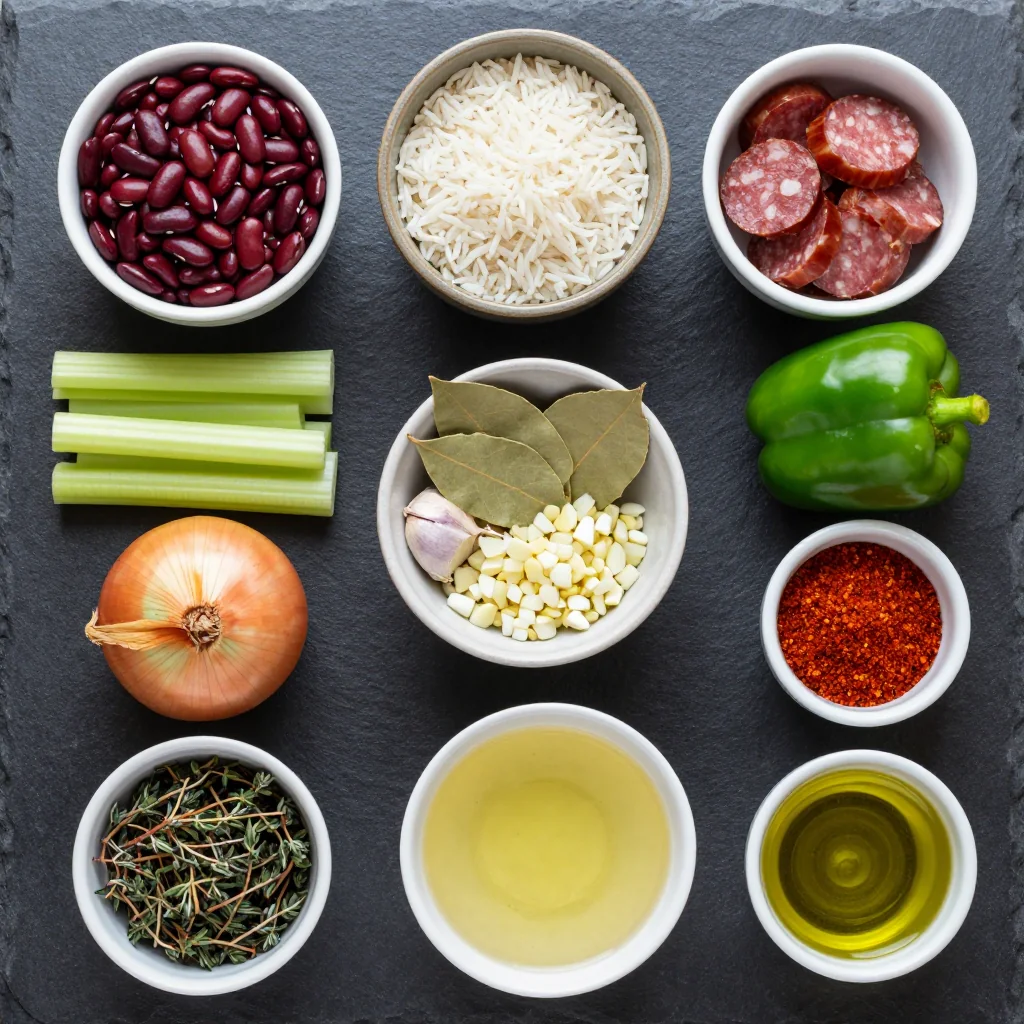
Great red beans and rice starts with the right bean. Look for large, dark-red kidney beans—preferably from this year’s harvest (check the date on the bag). Older beans can still work, but they’ll need an extra hour or two to surrender their starch and thicken the pot liquor. Camellia brand, if you can find it, is the Louisiana gold standard; otherwise, Goya or Bob’s Red Mill deliver consistent results.
Next comes the pork. A meaty ham hock lends collagen that melts into velvety body, but a leftover ham bone from New Year’s dinner is even better—more surface area equals more flavor. If pork isn’t on your table, substitute two tablespoons of white miso and a drizzle of liquid smoke; you’ll still coax umami depth into every spoonful.
The holy trinity—onion, celery, and green bell pepper—should be chopped small so it practically dissolves into the gravy. I like to add one rib of fennel for a gentle anise note that plays against the smoke. Garlic should be freshly minced; the pre-chopped jars taste metallic after eight hours of slow cooking.
Spices need to be fresh, not the dusty jars from 2019. Buy whole bay leaves (Turkish, not California) and crack them between your fingers to release oils. Thyme can be dried, but rub it between your palms first to wake up the volatile compounds. Cayenne degrades quickly; if yours smells like dusty paper, it’s time for a new bottle.
For the rice, long-grain white is traditional, but basmati adds a floral aroma that complements the sweet peppers. Rinse until the water runs clear—excess surface starch turns the grains gummy. Finally, keep a bottle of Crystal or Louisiana hot sauce on the table; the bright vinegar cuts through the creamy beans and wakes every other flavor.
How to Make Slow Cooker Red Beans and Rice for Martin Luther King Jr. Day
Brine the beans
The night before, dissolve 2 tablespoons kosher salt in 6 cups cold water. Add 1 pound dried red kidney beans and let stand 12–24 hours at room temperature. This step seasons the beans from the inside out and helps them hold their shape during the long cook.
Sear the aromatics
Heat 2 tablespoons neutral oil in a skillet over medium-high. Add diced onion, celery, bell pepper, and fennel with a pinch of salt. Sauté 6–7 minutes until the edges caramelize and the fond clinging to the pan smells nutty, not bitter. Stir in 4 cloves minced garlic for 30 seconds; scrape everything into the slow-cooker insert.
Build the base
Drain and rinse the brined beans; tip them into the cooker. Nestle in 1 large smoked ham hock, 2 bay leaves, 4 sprigs fresh thyme (or 1 teaspoon dried), ½ teaspoon cracked black pepper, ½ teaspoon cayenne, and 1 teaspoon smoked paprika. Pour in 4 cups low-sodium chicken stock and 2 cups water; the liquid should just cover the beans by ½ inch.
Low and slow
Cover and cook on LOW 8 hours. Resist the urge to peek for the first 6 hours; every lift of the lid drops the temperature and adds 20 minutes to the cook time. The beans are ready when you can blow on a spoonful and the skins curl back like tiny petals.
Smash and season
Remove the ham hock to a plate; shred the meat and discard skin and bones. Using the back of a ladle, smash roughly 1 cup of beans against the side of the insert. Return the meat, stir, and taste. Add salt only at the end—country ham hocks vary wildly in salinity. For brightness, splash in 1 tablespoon apple-cider vinegar.
Rice ritual
While the beans rest, rinse 2 cups long-grain rice under cold water until clear. Combine with 3½ cups water and 1 teaspoon salt in a saucepan. Bring to a boil, stir once, cover, and reduce to the lowest heat 15 minutes. Turn off heat; let stand 10 minutes. Fluff with a fork; each grain should stand proud and separate.
Serve with soul
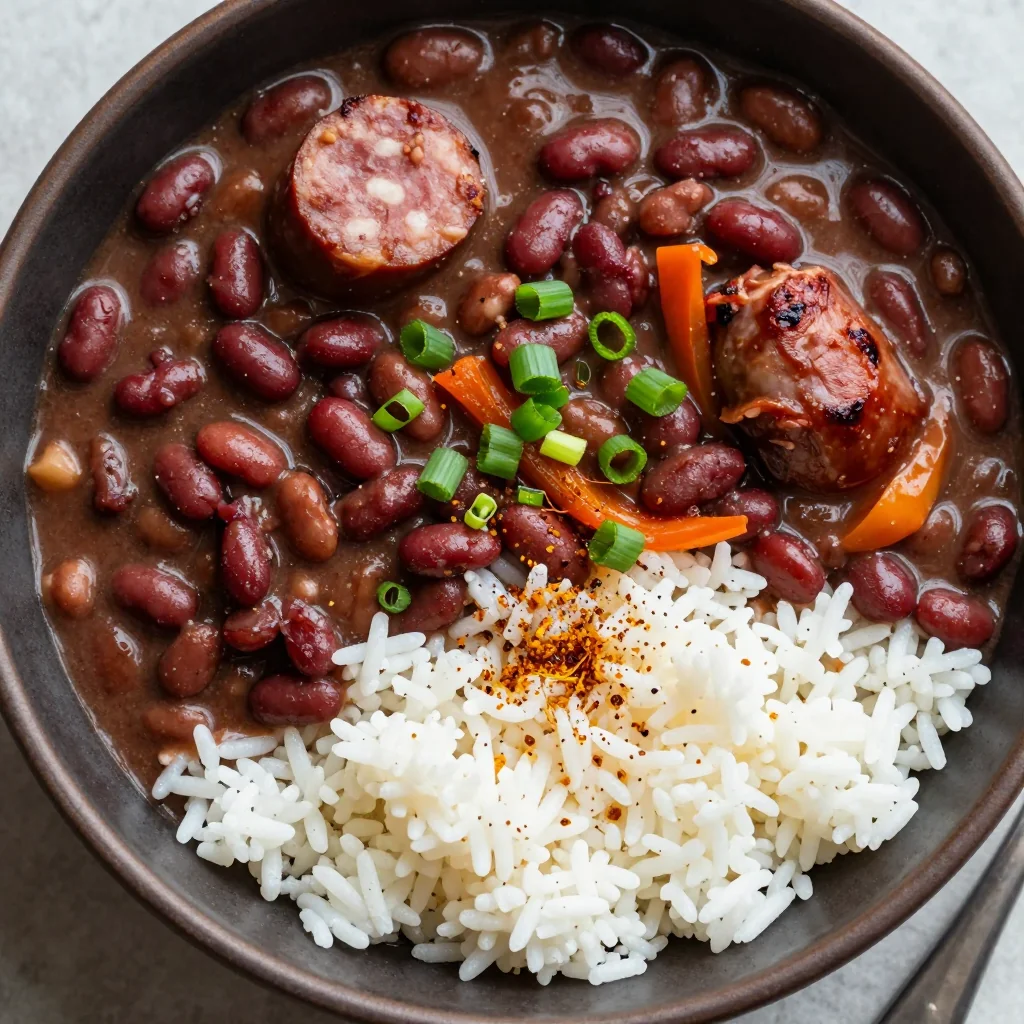
Spoon a mound of rice into warm bowls, ladle the beans around (not on top) so the gravy can creep into every crevice. Garnish with sliced green onions, Crystal hot sauce, and a confetti of parsley. Invite guests to stir the two components together; the rice absorbs the sauce and creates a creamy, porridge-like texture that tastes like history and home.
Expert Tips
Bean age test
Drop a handful of beans in a bowl of water; if more than half float, they’re too old and will never soften properly. Buy a fresh bag.
High-altitude hack
Above 3,000 ft? Add an extra cup of liquid and extend the cook time by 1 hour on LOW; water boils at a lower temp, so beans need longer to gelatinize their starches.
Lock the lid
Place a sheet of foil between the stoneware and the lid if your slow-cooker runs hot; it traps steam and prevents the top layer from drying out.
Overnight finish
Start the cooker just before bed; the beans will be perfect at 6 a.m. Switch to WARM and they’ll hold safely until brunch—ideal for MLK Day potlucks.
Gravy gauge
If the pot looks soupy at the end, tilt the insert and ladle off excess liquid into a skillet; boil 5 minutes to reduce, then stir back in for concentrated flavor.
Rice rescue
Overcooked the rice? Spread it on a rimmed baking sheet and refrigerate 10 minutes; the chill retrogrades the starch so grains firm up and stay separate.
Variations to Try
Vegan Uptown
Omit ham hock; add 2 tbsp white miso, 1 tsp liquid smoke, 1 tbsp soy sauce, and 1 cup diced smoked mushrooms. Finish with coconut oil for sheen.
Andouille Boost
Brown 12 oz sliced andouille sausage in step 2; reserve half for garnish. The rendered fat seasons the trinity and adds peppery snap.
Creole Heat
Double the cayenne and add 1 diced jalapeño with seeds. Stir in 1 tsp file powder at the end for earthy, grassy complexity and extra thickening.
Carolina Gold
Swap white rice for Carolina Gold heirloom rice; its nutty, almost popcorn aroma marries beautifully with the creamy beans.
Greens & Beans
Fold in 4 cups chopped collard greens during the last 30 minutes; they wilt into silky ribbons and boost the mineral punch.
Seafood Monday
Add 1 lb peeled shrimp during the last 10 minutes. The gentle heat poaches them to tender perfection without rubbery bounce.
Storage Tips
Refrigerator: Cool beans completely, then transfer to airtight containers with a thin layer of cooking liquid on top to prevent a skin from forming. They’ll keep up to 5 days; the flavor actually improves on day 2 as the spices meld.
Freezer: Portion into quart freezer bags, press out excess air, and freeze flat on a sheet pan. Once solid, stack like books. Use within 3 months for best texture. Thaw overnight in the fridge or defrost in a saucepan with a splash of water over low heat.
Rice separately: Store rice and beans in separate containers; rice freezes beautifully for 1 month. Reheat with a damp paper towel over the bowl to re-steam grains.
Make-ahead party: Double the recipe and freeze half for next month’s community-service day. A thawed batch tastes identical to fresh—just stir in a squeeze of lemon to wake up the flavors.
Frequently Asked Questions
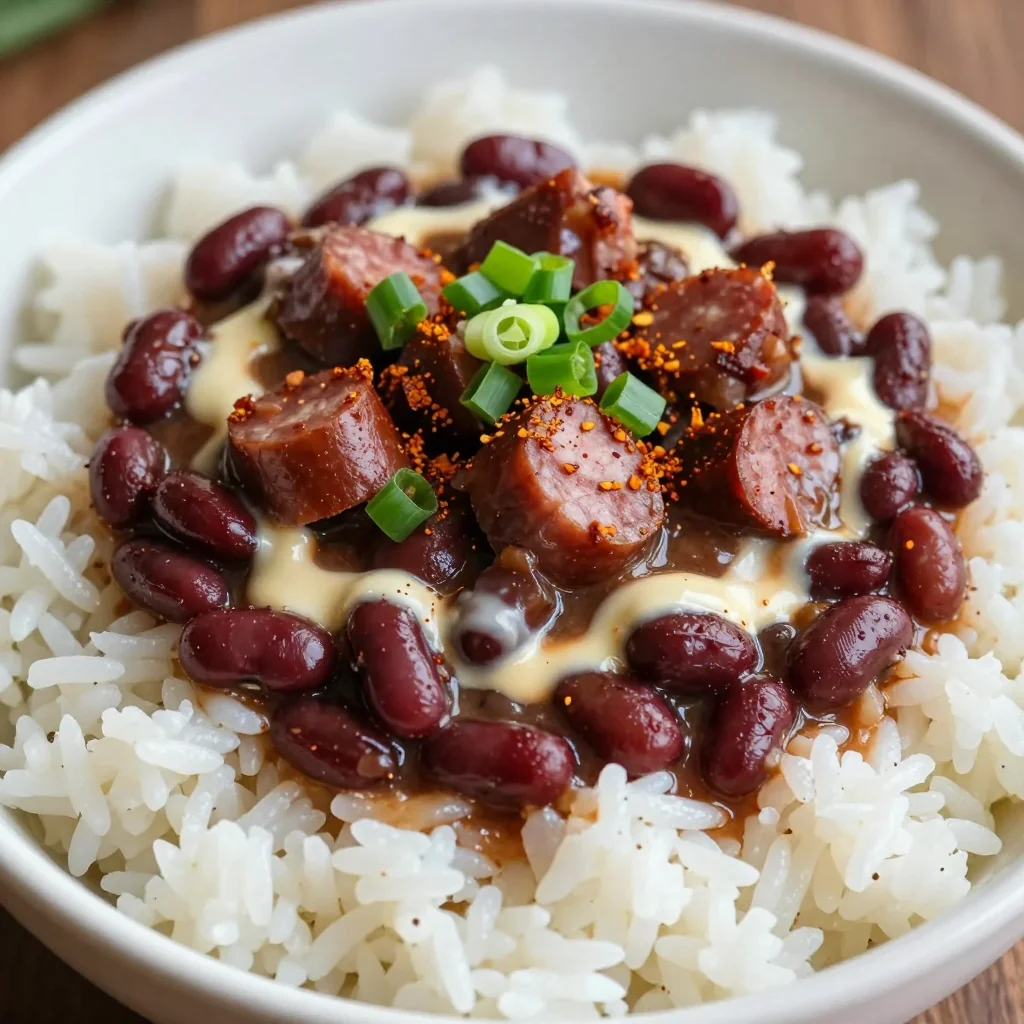
Slow Cooker Red Beans and Rice for Martin Luther King Jr. Day
Ingredients
Instructions
- Brine: Dissolve 2 tbsp salt in 6 cups water. Add beans; soak 12–24 h at room temp.
- Sauté aromatics: Heat oil in skillet over med-high. Cook onion, celery, bell pepper, fennel 6–7 min. Add garlic 30 sec. Scrape into slow-cooker.
- Build: Drain beans; add to cooker with ham hock, bay, thyme, cayenne, paprika, stock, and water.
- Cook: Cover; cook on LOW 8 h until beans blow their skins.
- Finish: Remove hock; shred meat. Smash 1 cup beans; return meat. Season with vinegar and salt to taste.
- Rice: Rinse rice. Combine with 3½ cups water and 1 tsp salt. Boil, cover, low 15 min; rest 10 min. Fluff.
- Serve: Spoon rice into bowls, ladle beans around, garnish with hot sauce, green onions, and parsley.
Recipe Notes
Beans thicken as they cool; thin leftovers with a splash of stock or water. For a smoky vegetarian version, omit ham hock and add 2 tbsp white miso plus 1 tsp liquid smoke.