Picture this: I was trying to impress a sushi‑loving friend with a homemade roll, but the rice turned into a sticky, translucent pancake that clung to the spoon like a bad ex. The kitchen smelled of raw fish and a faint ozone from the blender, and the sound of the rice cooker was a sad, low hum that echoed in my ears. I stared at the mess, feeling the heat of the countertop beneath my palms, and thought, “Maybe I should just order takeout.” But the stubborn urge to create something delicious—and daring—kept me standing, whisk in hand, determined to turn that disaster into a masterpiece.
The moment I first tasted the finished bake, the flavors erupted like fireworks on a quiet summer night. The salmon was buttery and flaky, yet firm enough to hold its shape, while the creamy mayo‑sriracha glaze dripped down the sides like a glossy, spicy river. The rice, perfectly seasoned, had that subtle tang of vinegar that danced on the back of the tongue, and the seaweed sheets provided a satisfying snap that whispered “crunch” with every bite. The aroma that filled the kitchen was a heady blend of umami, citrus, and a hint of toasted sesame that made even the most skeptical palate swoon. My friend, who had been skeptical at first, stared at the plate, then took a bite and declared, “I dare you to taste this and not go back for seconds.” I laughed, knowing that this was hands down the best version you’ll ever make at home.
What sets this salmon sushi bake apart from the countless variations out there is its layered complexity that feels both comforting and adventurous. Instead of the usual plain rice, I fold in a splash of seasoned vinegar that gives the grains a bright, citrusy zing. The mayo‑sriracha blend coats the salmon like velvet, creating a silky, spicy glaze that melts in the mouth. I’ve added a secret ingredient—Japanese mayonnaise—that balances the heat and adds a subtle sweetness, while the cream cheese brings a rich, velvety texture that keeps the dish from feeling too dry. The result is a harmonious blend of textures: the buttery salmon, the tender rice, the crunchy seaweed, and the glossy glaze, all wrapped in a single, unforgettable bite.
There’s also a technique that will surprise you: I finish the bake with a quick burst of unagi sauce and a sprinkle of furikake seasoning right before serving. This final touch adds a smoky, umami depth that elevates the dish to sushi‑bar quality. And if you’re still skeptical, imagine the kitchen filling with the aroma of toasted sesame, citrus, and that unmistakable scent of fresh fish. Let me walk you through every single step—by the end, you’ll wonder how you ever made it any other way.
What Makes This Version Stand Out
- Flavor: The dual mayo blend—Japanese and regular—creates a creamy base that balances the sharpness of sriracha and the subtle sweetness of avocado.
- Texture: The rice is perfectly sticky yet separate, thanks to the seasoned vinegar, while the salmon stays moist and flaky.
- Ease: All ingredients are pre‑measured, so you can skip the guessing game and focus on the fun.
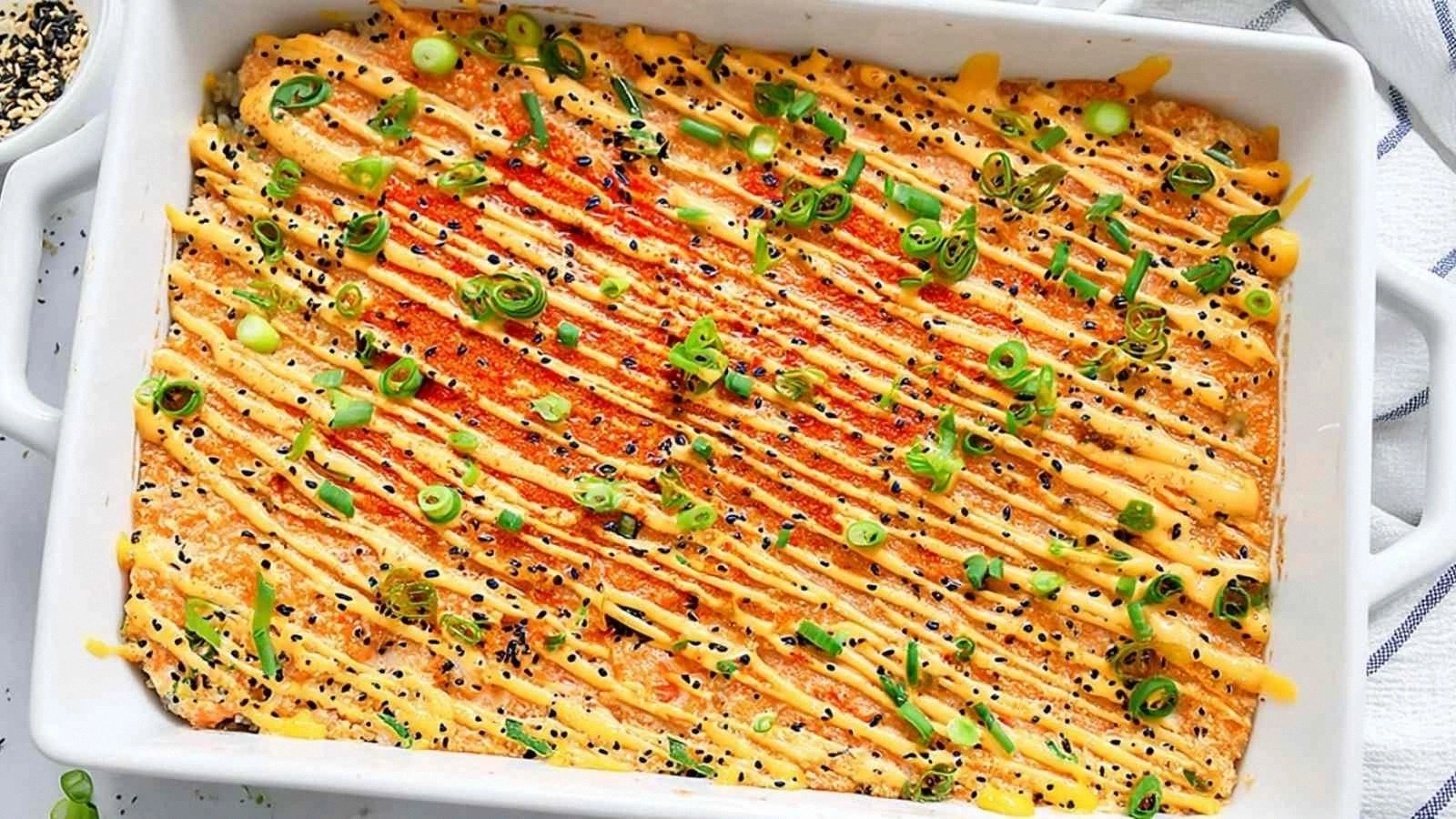
- Visual Appeal: The golden glaze, vibrant green onions, and the contrast of black and white sesame seeds make it Instagram‑ready.
- Crowd‑Pleaser: Even the most skeptical foodie will fall in love, and you’ll hear the “I dare you” challenge echoing around the table.
- Ingredient Quality: Fresh salmon, high‑grade Japanese mayonnaise, and authentic furikake give the dish an upscale feel.
- Method Simplicity: One pot for rice, one pan for salmon, and a single bake—no juggling of trays or burners.
- Make‑Ahead Potential: Assemble the layers a day ahead; the flavors deepen, and the bake is ready to pop in the oven at the last minute.
Alright, let's break down exactly what goes into this masterpiece…
Inside the Ingredient List
The Flavor Base
Dry sushi rice is the backbone of any sushi dish; it’s the canvas that holds every other flavor. When you rinse the rice until the water runs clear, you’re removing excess starch that would otherwise make the grains gummy. The seasoned rice vinegar—¼ cup—provides that bright, citrusy kick that cuts through the richness of the salmon and the creaminess of the mayo. If you skip the vinegar, the rice will taste flat and the dish will feel like a bland casserole. A good tip: let the vinegar cool slightly before mixing it into the rice; this prevents the grains from becoming soggy.
The Texture Crew
Salmon fillet (1.5 lb) is the star; choose a fresh, high‑fat cut for maximum flavor and melt‑in‑your‑mouth texture. Season it simply with salt, pepper, and ½ tsp garlic powder—this subtle seasoning lets the fish shine without overpowering the other components. I like to sear the salmon lightly before baking to lock in juices; if you skip this step, the fish might dry out during the bake. The 8 oz imitation crab meat adds a sweet, briny contrast that mimics the oceanic flavor of real crab without the cost.
The mayo‑sriracha sauce—made from ½ cup Japanese mayo, 1 Tbsp sriracha, 3 Tbsp regular mayo, and 1 Tbsp sriracha again—creates a silky glaze that coats the salmon and rice. The Japanese mayo’s subtle sweetness balances the heat, while the regular mayo adds body. The 4 oz cream cheese brings a velvety richness that keeps the bake from feeling dry. A pinch of lime juice (1 tsp) brightens the entire dish, adding a zesty note that cuts through the richness. The 2 green onions, finely sliced, provide a fresh, sharp bite that lifts the palate.
The Unexpected Star
Black and white sesame seeds (1 Tbsp) add a nutty crunch that contrasts with the soft rice and salmon. They also give the dish a beautiful visual pop. The roasted seaweed sheets are the traditional sushi wrap; they add a savory, slightly smoky flavor and a satisfying snap when bitten into. If you’re adventurous, sprinkle a little extra furikake seasoning (2 Tbsp) on top before baking; it adds umami and a subtle crunch.
The Final Flourish
Unagi sauce (2 Tbsp) is drizzled over the finished bake to introduce a sweet, smoky glaze reminiscent of grilled eel. The 1 English cucumber, sliced thinly, offers a crisp, refreshing contrast that balances the richness of the salmon and mayo. The 1 ripe avocado, diced, brings creamy texture and a buttery flavor that ties everything together. If you want to elevate the dish further, add a dash of lime zest or a splash of ponzu sauce for extra brightness.
Everything's prepped? Good. Let's get into the real action…
The Method — Step by Step
- Step 1: Preheat your oven to 375°F (190°C). While the oven heats, rinse the sushi rice under cold water until the water runs clear. Drain the rice, then add it to a medium saucepan with 2 cups of water. Bring to a boil, reduce the heat to low, cover, and simmer for 18 minutes. After the water has absorbed, let the rice sit covered for 10 minutes. The result should be fluffy grains that hold together without clumping. This step is crucial; if the rice is too wet, the bake will become mushy, and if it’s too dry, it will crumble.
- Step 2: While the rice cooks, season the salmon fillet with salt, pepper, and ½ tsp garlic powder. Heat a skillet over medium heat and sear the salmon for 1–2 minutes on each side, just until the edges start to brown. This quick sear locks in moisture and adds a subtle caramelized flavor. If you prefer a raw center, simply skip the searing step and place the salmon directly into the oven. The key is to keep the salmon moist and flavorful.
- Step 3: In a small bowl, whisk together ½ cup Japanese mayo, 1 Tbsp sriracha, 3 Tbsp regular mayo, and 1 Tbsp sriracha until smooth. Stir in 1 Tbsp low sodium soy sauce, 1 tsp lime juice, and 2 Tbsp furikake seasoning. This sauce is the glue that holds the bake together, providing a creamy, spicy, and umami-rich coating. If you like it spicier, add an extra splash of sriracha; if you prefer a milder version, reduce the sriracha to half.
- Step 4: Spread a thin layer of the mayo‑sriracha sauce across the bottom of a 9x13 inch baking dish. Place the seared salmon fillet on top, skin side down. Pour the remaining sauce over the salmon, ensuring even coverage. This ensures that every bite of salmon is infused with that luscious glaze. If you’re using raw salmon, simply spread the sauce directly on the fillet.
- Step 5: Gently fold the cooked rice into the baking dish, arranging it in a single layer around and over the salmon. Sprinkle the 8 oz imitation crab meat evenly over the rice, then scatter 2 green onions, 1 Tbsp black and white sesame seeds, and the 2 Tbsp furikake seasoning. This creates a layered flavor profile where each bite contains a balance of rice, salmon, crab, and crunchy toppings. The crab adds a sweet, briny note that contrasts beautifully with the creamy sauce.
- Step 6: Drizzle the 2 Tbsp unagi sauce over the entire bake. The unagi sauce’s sweet, smoky glaze will caramelize slightly in the oven, giving the dish a glossy finish. Cover the baking dish loosely with foil to keep the moisture in while allowing the top to brown. Bake for 20 minutes, then remove the foil and bake for an additional 5–7 minutes, until the top is golden and slightly crisp. The aroma during this step—rich, buttery, and slightly sweet—will have everyone in the kitchen humming.
- Step 7: While the bake finishes, slice the 1 English cucumber into thin rounds and dice the 1 ripe avocado. These fresh elements will be added after baking, providing a cool, refreshing contrast to the warm, savory bake. If you prefer a crunchy texture, you can also lightly toast the cucumber slices before adding them.
- Step 8: Once the bake is done, let it rest for 5 minutes. This resting period allows the flavors to meld and the rice to set, preventing a sticky mess when you cut it. After resting, slice the bake into squares or wedges, then top each piece with a spoonful of diced avocado and a few cucumber slices. The avocado adds creaminess, while the cucumber adds a crisp bite that cuts through the richness.
- Step 9: Garnish the finished dish with additional 1 Tbsp black and white sesame seeds and a drizzle of extra unagi sauce if desired. Arrange the roasted seaweed sheets on the side as a traditional sushi wrap, or cut them into strips for dipping. The seaweed adds a savory, umami punch that completes the sushi experience.
- Step 10: Serve immediately with soy sauce, pickled ginger, and wasabi on the side. Encourage your guests to dip each bite into soy sauce for an extra burst of umami, or to mix a small amount of wasabi into the mayo glaze for a spicy kick. The final plate should look vibrant, with layers of color from the salmon, avocado, cucumber, and sesame seeds, and the glossy glaze reflecting the light.
That's it— you did it. But hold on, I've got a few more tricks that'll take this to another level. These insider tips will help you master the bake, avoid common pitfalls, and ensure every bite is a triumph.
Insider Tricks for Flawless Results
The Temperature Rule Nobody Follows
Many people bake sushi bakes at a high heat, hoping to get a crisp top, but that often burns the glaze and dries out the salmon. I recommend baking at 375°F (190°C) for the first 20 minutes, then lowering the temperature to 350°F (175°C) for the final 5–7 minutes. This gentle finish caramelizes the sauce without scorching it, and the salmon stays moist. I once baked at 400°F and ended up with a burnt top that tasted like charcoal—don’t make that mistake!
Why Your Nose Knows Best
When the bake is halfway done, open the oven door and inhale the aroma. If you smell a faint, sweet, umami scent, you’re on the right track. If you catch a sharp, burnt scent, lower the temperature immediately. Your nose is the best indicator of doneness for this dish; trust it, and you’ll avoid the dreaded “burnt sushi bake” situation.
The 5-Minute Rest That Changes Everything
After removing the bake from the oven, let it sit uncovered for 5 minutes. This rest period allows the rice to set, preventing it from sliding off the salmon when you cut it. It also lets the flavors meld, so the mayo glaze thickens slightly and coats each bite more evenly. Skipping this step often results in a messy, uneven bite that feels more casserole than sushi.
The Quick Crust Trick
If you love a little crunch, sprinkle an extra 1 Tbsp of sesame seeds on top before baking. The seeds will toast to a golden crunch that adds a delightful texture contrast to the creamy interior. I’ve seen people call it the “crunchy surprise” that elevates the dish from simple to spectacular.
The Flavor Layering Game
Layer the ingredients in a specific order: start with the rice, then the crab, followed by the salmon, and finally the mayo glaze. This arrangement ensures that the flavors meld as they bake, giving you a harmonious taste in every bite. If you layer the salmon on top of the rice and then pour the sauce, the rice can become soggy and lose its structure.
Creative Twists and Variations
This recipe is a playground. Here are some of my favorite ways to switch things up:
Spicy Tuna Remix
Swap the salmon for 1.5 lb of fresh tuna, seasoned with a dash of sesame oil and a pinch of cayenne. The tuna’s firmer texture and stronger flavor pair wonderfully with the mayo‑sriracha glaze, creating a spicy, umami-packed version that will have your guests begging for more.
Mediterranean Twist
Replace the furikake and sesame seeds with 2 Tbsp of za'atar and a sprinkle of toasted pine nuts. Add a handful of chopped Kalamata olives and a drizzle of extra virgin olive oil. This version gives the bake a fragrant, herbaceous profile that transports you to the Mediterranean coast.
Vegan Version
Omit the salmon and use a block of marinated tofu or tempeh instead. Use a vegan mayonnaise and substitute the cream cheese with a cashew‑based cream. The tofu will absorb the mayo‑sriracha glaze beautifully, offering a plant‑based alternative that still delivers on flavor.
Crunchy Panko Layer
Before baking, sprinkle a thin layer of panko breadcrumbs over the top of the sauce. The panko will toast to a golden crunch, giving the dish an unexpected textural contrast. This is perfect for guests who love a little extra crunch in every bite.
Miso Glaze Upgrade
Stir 2 Tbsp of white miso paste into the mayo‑sriracha sauce for a deeper umami flavor. The miso adds a subtle earthy note that complements the sweet unagi sauce and the fresh cucumber. This variation is ideal for those who enjoy a richer, more complex flavor profile.
Storing and Bringing It Back to Life
Fridge Storage
Store any leftover bake in an airtight container in the refrigerator for up to 3 days. The mayo glaze will firm up slightly, so if you want a more moist texture, reheat it briefly in the microwave or on a skillet with a splash of water to steam it back to perfection. The rice may become a bit drier, but the flavors remain intact.
Freezer Friendly
For longer storage, wrap the bake tightly in plastic wrap and place it in a freezer bag. It will keep well for up to 2 weeks. When you’re ready to enjoy it again, thaw overnight in the refrigerator, then reheat in the oven at 350°F (175°C) for 15–20 minutes, or until warmed through. The rice will soften, but the salmon will still retain a good texture.
Best Reheating Method
The secret to reheating a salmon sushi bake is to keep it moist. Add a tiny splash of water to the baking dish before covering it with foil and heating in the oven. This creates steam that keeps the rice and salmon from drying out, restoring the original creamy, buttery texture. Finish with a quick drizzle of soy sauce or a sprinkle of fresh green onions to bring back the fresh, bright flavors.