I remember the night I nearly burned my apartment down while trying to impress a friend with a “simple” salad. The butternut squash I tossed in the oven turned out as a charred, bitter mess, and my friend’s eyes widened like a cat seeing a laser pointer. That disaster became the catalyst for this perfected version of Roasted Butternut Squash Salad, the kind of dish that turns a kitchen mishap into a culinary triumph.
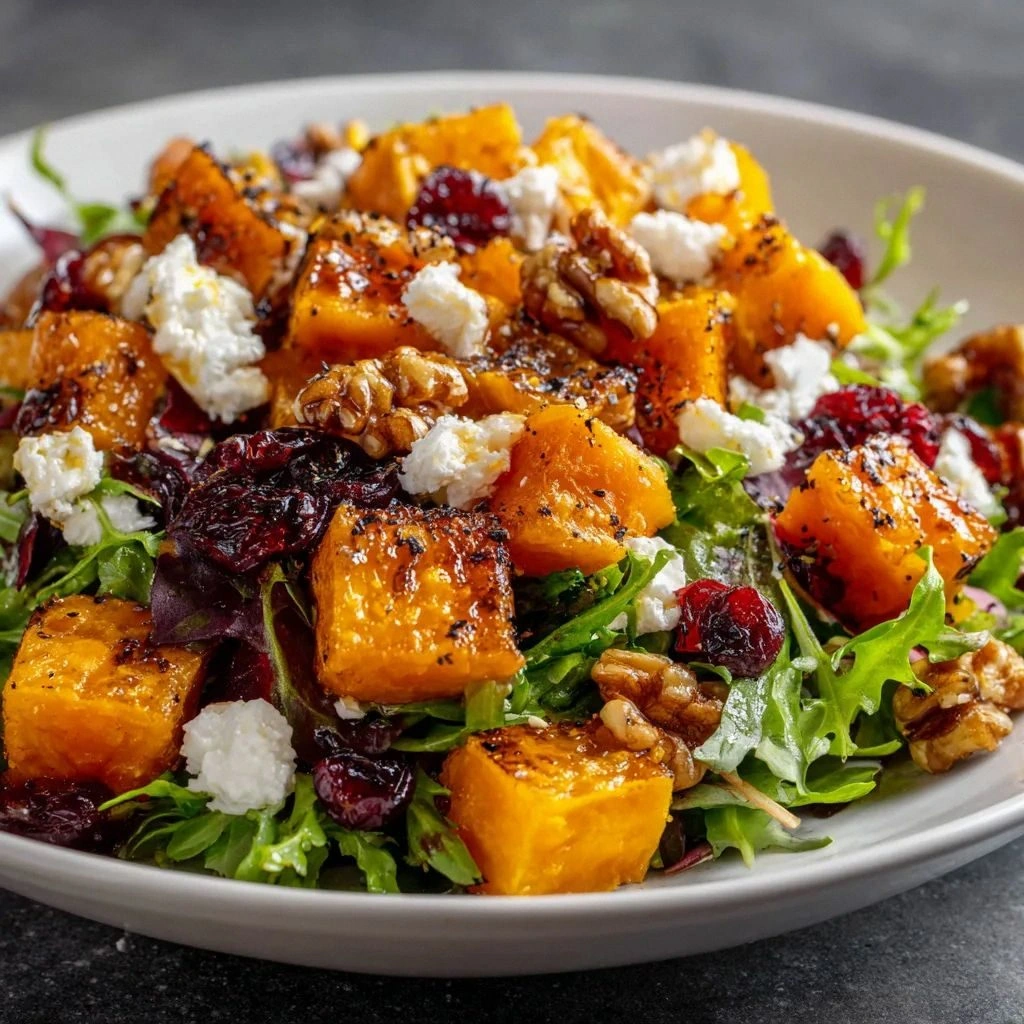
Picture this: a golden, caramelized cube of squash that releases a sweet, nutty aroma as it slides off the tray, mingling with the sharp tang of balsamic vinegar and the creamy bite of feta. The crunch of walnuts snaps like a crisp autumn leaf, while the dried cranberries burst with tartness that cuts through the richness. Every bite is a textural ballet—soft, crunchy, creamy, and sweet—balanced by a subtle heat from black pepper and a whisper of cinnamon that feels like a hug in a bowl.
What makes this version stand out? It’s not just the ingredients; it’s the technique. I’ve discovered that roasting the squash at a higher temperature creates a caramelized crust that holds its shape, preventing a mushy disaster. The addition of a touch of cinnamon lifts the sweet notes, giving the salad a warm, comforting undertone that’s perfect for fall yet season‑agnostic. And the dressing—made with just a splash of olive oil, a dash of balsamic, and a sprinkle of salt—coats the greens like velvet, making every bite a silky experience.
I dare you to taste this and not go back for seconds. If you’ve ever struggled with balancing sweet and savory in a salad, you’re not alone—this is the fix you’ve been searching for. Most recipes get this completely wrong by over‑roasting the squash or under‑seasoning the dressing. Picture yourself pulling this out of the oven, the whole kitchen smelling incredible, and knowing that you just made the best salad you’ll ever create at home.
Let me walk you through every single step—by the end, you’ll wonder how you ever made it any other way. The next section will reveal the secret sauce that makes this dish unforgettable, and trust me, the flavor profile will stay with you long after the last bite.
What Makes This Version Stand Out
- Roasting Technique: A high‑temperature roast creates a caramelized exterior that locks in sweetness while keeping the interior tender. This contrast in textures elevates the salad from ordinary to extraordinary.
- Cinnamon Touch: A half‑teaspoon of cinnamon adds depth and warmth, turning a simple squash into a comforting, almost dessert‑like experience.
- Balanced Dressing: A quick vinaigrette made with olive oil, balsamic vinegar, salt, and pepper coats each leaf, ensuring every bite is flavorful without overpowering the natural sweetness.
- Crunch Factor: Walnuts provide a satisfying crunch that shatters like thin ice, adding an audible bite that enhances the eating experience.
- Color Pop: Dried cranberries give a pop of red that contrasts beautifully with the orange squash and green greens, making the dish visually stunning.
- Versatility: The ingredients can be swapped for vegan or gluten‑free options without losing the core flavor profile, making it a crowd‑pleaser for all diets.
- Make‑ahead Friendly: The roasted squash can be prepared a day ahead, and the salad holds up well in the fridge, making it a convenient option for busy weeknights.
- Health‑Focused: Packed with vitamins, healthy fats, and fiber, this salad is a nutrient‑dense meal that satisfies without excess calories.
Alright, let's break down exactly what goes into this masterpiece…
Inside the Ingredient List
The Flavor Base
Butternut Squash is the star of the show. Its natural sweetness shines when roasted, adding depth to the salad. If you choose a smaller squash, you’ll still get the same caramelized flavor; just adjust the quantity to keep the ratio of 2 cups diced. Skipping the squash would turn this into a plain green salad—no fun. For a sweeter twist, try adding a drizzle of honey after roasting.
Olive Oil is the liquid gold that helps the squash caramelize beautifully while adding healthy fats. A good quality extra‑virgin olive oil will give a peppery finish that brightens the dish. If you’re on a budget, a light olive oil will still work, but the flavor profile will be milder.
Salt is essential for enhancing flavors, it brings out the best in every ingredient. A pinch of sea salt is ideal, but if you prefer kosher, it works just as well. Don’t skip salt—without it, the dish will taste flat and unremarkable.
Black Pepper adds a subtle kick that balances the sweetness of the squash. A pinch is enough; over‑peppering will mask the delicate flavors. If you love heat, a dash of crushed red pepper flakes can replace black pepper for a spicy twist.
The Texture Crew
Mixed Greens provide a fresh, crisp base that complements the roasted squash. Use a blend of arugula, spinach, and romaine for varied textures. If you only have baby spinach, it will still hold up, but you’ll miss the bite of romaine.
Dried Cranberries add a burst of tartness and a pop of color, making the salad visually appealing. They also provide a chewy texture that contrasts with the crunchy walnuts. If you’re avoiding dried fruit, fresh cranberries or chopped dried apricots can work as substitutes.
The Unexpected Star
Feta Cheese is creamy and tangy, adding a delightful contrast to the sweet squash. For a vegan option, crumble a plant‑based feta or sprinkle nutritional yeast for a cheesy flavor. Skipping feta will reduce the richness, but the salad will still be tasty.
Walnuts are chopped to add crunch and a nutty flavor, enhancing the overall texture of the salad. Toast them lightly for extra nuttiness; this step can be done in a dry skillet over medium heat for 2–3 minutes. If you’re allergic, almonds or pecans can be used instead.
The Final Flourish
Balsamic Vinegar ties all the flavors together, creating a tangy dressing that balances the sweetness and richness. A splash of high‑quality balsamic will add depth; a cheaper version will taste syrupy. If you prefer a sweeter dressing, mix balsamic with a touch of maple syrup.
Everything's prepped? Good. Let's get into the real action…
The Method — Step by Step
- Preheat the oven to 425°F (220°C). This high temperature is crucial for caramelizing the squash. Line a baking sheet with parchment paper to prevent sticking. Place the diced squash in a single layer, ensuring even roasting.
- Season the squash. Drizzle with 2 tbsp of olive oil, sprinkle with salt and a pinch of black pepper, then toss until every piece is coated. The oil creates a glossy surface that turns golden brown. Watch the edges; when they start pulling away, you’re close to perfection.
- Roast for 20–25 minutes. Turn the cubes halfway through to ensure even browning. The aroma that fills the kitchen is the first hint that you’re on the right track. The squash should smell toasty, like sweet caramel.
- Cool the squash. Once roasted, spread the cubes on a wire rack to cool slightly. This prevents steam from softening the exterior. While cooling, prepare the dressing.
- Make the vinaigrette. In a small bowl, whisk together 2 tbsp balsamic vinegar, 1 tbsp olive oil, a pinch of salt, and a pinch of black pepper. The dressing should be emulsified; if it separates, give it a quick whisk again. This quick dressing coats the greens like velvet.
- Toss the greens. In a large bowl, combine 4 cups of mixed greens. Add the cooled squash, 1 cup dried cranberries, and 0.5 cup crumbled feta. Sprinkle 0.5 cup chopped walnuts on top.
- Dress the salad. Drizzle the vinaigrette over the mixture and gently toss to coat. The dressing should cling to each leaf, creating a harmonious flavor profile.
- Add cinnamon. Sprinkle 0.5 tsp of cinnamon over the salad. This subtle spice lifts the sweetness and adds a cozy, aromatic note.
- Serve immediately. The salad is best enjoyed fresh, while the squash is still slightly warm and the walnuts are crunchy. If you need to hold it, cover loosely with foil and keep it in the fridge for up to 2 days.
That's it — you did it. But hold on, I've got a few more tricks that'll take this to another level…
Insider Tricks for Flawless Results
The Temperature Rule Nobody Follows
Many people roast at 375°F, but that’s too low for a caramelized crust. Elevating to 425°F ensures the sugars in the squash caramelize without drying out. This small temperature tweak can transform a good salad into a great one.
Why Your Nose Knows Best
When the squash hits the oven, the scent of caramelized sugar rises like a promise. Trust that aroma; it means the sugars are turning. If you smell nothing, give it a few more minutes. Your nose is your best sous‑chef.
The 5-Minute Rest That Changes Everything
Let the roasted squash rest for 5 minutes on the baking sheet. This rest period allows the steam to dissipate, preserving the crunch. Skipping it often results in a soggy bite that ruins the texture.
A Pinch of Cinnamon Is All You Need
Adding cinnamon after roasting gives the dish a subtle warmth that pairs perfectly with the sweet squash. Too much cinnamon can overpower, so keep it to a half‑teaspoon. The aroma alone will elevate the entire salad.
Mix Dressing Just Before Serving
Hold off on adding the vinaigrette until right before you serve. This keeps the greens crisp and prevents them from wilting in the dressing. The dressing should cling to each leaf, creating a silky finish.
Creative Twists and Variations
This recipe is a playground. Here are some of my favorite ways to switch things up:
Spicy Jalapeño Kick
Add thinly sliced jalapeño to the roasted squash for a heat that balances the sweetness. The pepper’s bite adds a modern twist and makes the salad great for summer barbecues.
Mediterranean Flair
Swap feta for goat cheese and add a handful of kalamata olives. Toss in a drizzle of olive oil and a squeeze of lemon for a bright, Mediterranean vibe.
Vegan Upgrade
Replace feta with crumbled tofu seasoned with nutritional yeast. Keep the walnuts for crunch, and use a vegan balsamic for the dressing. This version maintains all the flavors while keeping it plant‑based.
Winter Warmth
Add a handful of sautéed mushrooms and a splash of maple syrup to the dressing. The earthy mushrooms and sweet syrup create a comforting, winter‑ready salad that feels like a hearty soup.
Protein Power
Top the salad with grilled chicken or chickpeas for a protein boost. The protein adds satiety and turns the salad into a full meal, perfect for lunch or a light dinner.
Nutty Variation
Replace walnuts with toasted pumpkin seeds and add a pinch of smoked paprika. The smoky flavor pairs beautifully with the sweet squash and gives the salad a new dimension.
Storing and Bringing It Back to Life
Fridge Storage
Store the salad in an airtight container for up to 2 days. Keep the dressing separate until ready to serve to maintain the crispness of the greens. A splash of water before reheating can help re‑soften the squash if it becomes a bit dry.
Freezer Friendly
Roasted squash can be frozen for up to 2 months. Store in a freezer bag and thaw in the fridge overnight. Reheat in a skillet over medium heat for 5 minutes to bring back the crunch.
Best Reheating Method
Reheat the salad in a skillet or oven at 350°F for 5 minutes. Add a splash of water or broth to keep the squash moist. Toss with fresh dressing right before serving for maximum flavor.