Picture this: a Sunday afternoon, the kitchen is a battlefield, a pot of overcooked pasta sits on the counter, and the fridge is a barren wasteland of wilted lettuce. I was halfway through a frantic scramble for dinner when a friend texted, “I found this red wine vinaigrette that turns any salad into a party.” I laughed, thinking it was just another bland dressing, but I was wrong. The aroma that hit me the moment I cracked the bottle—deep, fruity, with a hint of citrus—was the first sign of a culinary revelation. I was instantly hooked, and the next thing I knew, I had a full plate of vibrant greens, juicy cherry tomatoes, and a dressing that sang. That night, I decided this wasn’t just a one‑off experiment; it was the kind of recipe that deserves a permanent spot in my kitchen arsenal.
Fast forward to today, and I’m here, fingers poised, ready to share every secret that makes this red wine vinaigrette salad “Dre” stand out from the crowd. From the way the dressing emulsifies like a silky velvet that coats each leaf, to the subtle kick of red pepper flakes that dance on the tongue, every element is carefully calibrated. I dare you to taste this and not go back for seconds because this is hands down the best version you’ll ever make at home. And if you’re wondering whether it’s a one‑time wonder or a staple, trust me—once you’ve had it, you’ll find yourself reaching for the bottle of red wine before you even think about the dressing.
What’s truly remarkable about this recipe is that it doesn’t require a fancy kitchen gadget or a pantry full of exotic ingredients. It’s a testament to the power of a few high‑quality staples—red wine, olive oil, vinegar, and a handful of fresh herbs. The technique is simple, the flavor profile is complex, and the results are consistently crowd‑pleasing. I’ve tried this recipe in a potluck, a backyard BBQ, and even a quiet Sunday lunch; each time, the applause was the same: “Where did you get this dressing?” And the best part? It’s make‑ahead friendly, so you can prep it in advance and let the flavors mature like a fine wine.
Before we dive into the nitty‑gritty of the recipe, let me give you a quick heads‑up: there’s a little trick involving the red wine that will elevate the dressing from good to unforgettable. Keep your eyes on the next section, because I’ll walk you through every single step—by the end, you’ll wonder how you ever made it any other way.
What Makes This Version Stand Out
- Flavor Depth: The red wine provides a robust backbone, while the vinegar adds a bright, acidic lift that cuts through the richness of the olive oil. Together, they create a dressing that feels both bold and balanced.
- Emulsion Ease: The mustard acts as a natural emulsifier, ensuring the oil and wine blend smoothly. The result is a silky texture that clings to every leaf.
- Freshness Boost: Adding fresh herbs like thyme and parsley not only brightens the flavor but also introduces a subtle aroma that makes the salad feel alive.
- Versatility: Whether you’re tossing mixed greens, arugula, or spinach, this dressing adapts perfectly. It also works beautifully over roasted vegetables or as a dip for crusty bread.
- Make‑Ahead Friendly: The vinaigrette can be prepared up to 48 hours in advance, and the flavors only deepen. It’s perfect for meal prep or for a last‑minute dinner.
- Ingredient Quality: Using a medium‑body red wine (like a Merlot or a Pinot Noir) gives the dressing a subtle fruitiness that’s more nuanced than a cheap store brand.
- Texture Contrast: The addition of toasted nuts or seeds adds a satisfying crunch, creating a multi‑sensory experience with every bite.
- Social Magnet: At gatherings, the dressing becomes a conversation starter. People ask for the recipe, and you get to brag about your culinary prowess.
Alright, let’s break down exactly what goes into this masterpiece…
Inside the Ingredient List
The Flavor Base
At the heart of this dressing is a carefully chosen red wine. A medium‑body Merlot or a smooth Pinot Noir works best, as they offer a balance of fruitiness and acidity without overpowering the other ingredients. If you’re in a pinch, a dry red wine from a local grocery store will do, but aim for one with a subtle oak finish for that extra layer of complexity.
Red wine vinegar is the second pillar. It sharpens the dressing and keeps the oil from becoming too heavy. A splash of white wine vinegar can substitute, but the red variety gives a richer color and deeper flavor that pairs beautifully with the wine itself.
The Texture Crew
Extra‑virgin olive oil is the carrier of all the flavors. It should be high‑quality, preferably cold‑pressed, to bring a buttery smoothness that coats the greens. A light drizzle of oil can be used if you’re watching calories, but the full amount is essential for that silky finish.
Dijon mustard isn’t just a condiment; it’s the secret weapon that keeps the dressing from separating. It acts as an emulsifier, binding the oil and wine into a cohesive mixture. If you’re allergic to mustard, a teaspoon of tahini or a dab of mayonnaise can work as a substitute, though the flavor will shift slightly.
The Unexpected Star
A clove of garlic, minced finely, adds a punch of umami that elevates the dressing. The garlic should be minced into a paste to avoid large chunks that can feel overpowering. If you prefer a milder taste, sauté the garlic briefly in oil before adding it to the dressing.
A small shallot, finely chopped, brings a sweet, oniony undertone that balances the acidity of the wine and vinegar. Shallots are less pungent than onions, making them a perfect addition to a vinaigrette that should feel light yet flavorful.
The Final Flourish
Fresh herbs—thyme and parsley—add brightness and a fresh aroma. The thyme should be left on its stems for a subtle woodsy note, while parsley adds a clean, peppery finish. If you’re out of fresh herbs, dried ones can be used, but the flavor will be less vibrant.
A teaspoon of honey or maple syrup balances the acidity, giving the dressing a gentle sweetness that makes it more approachable for those who find vinaigrettes too tart. You can experiment with different sweeteners—agave or brown rice syrup—depending on your taste preference.
Everything’s prepped? Good. Let’s get into the real action…
The Method — Step by Step
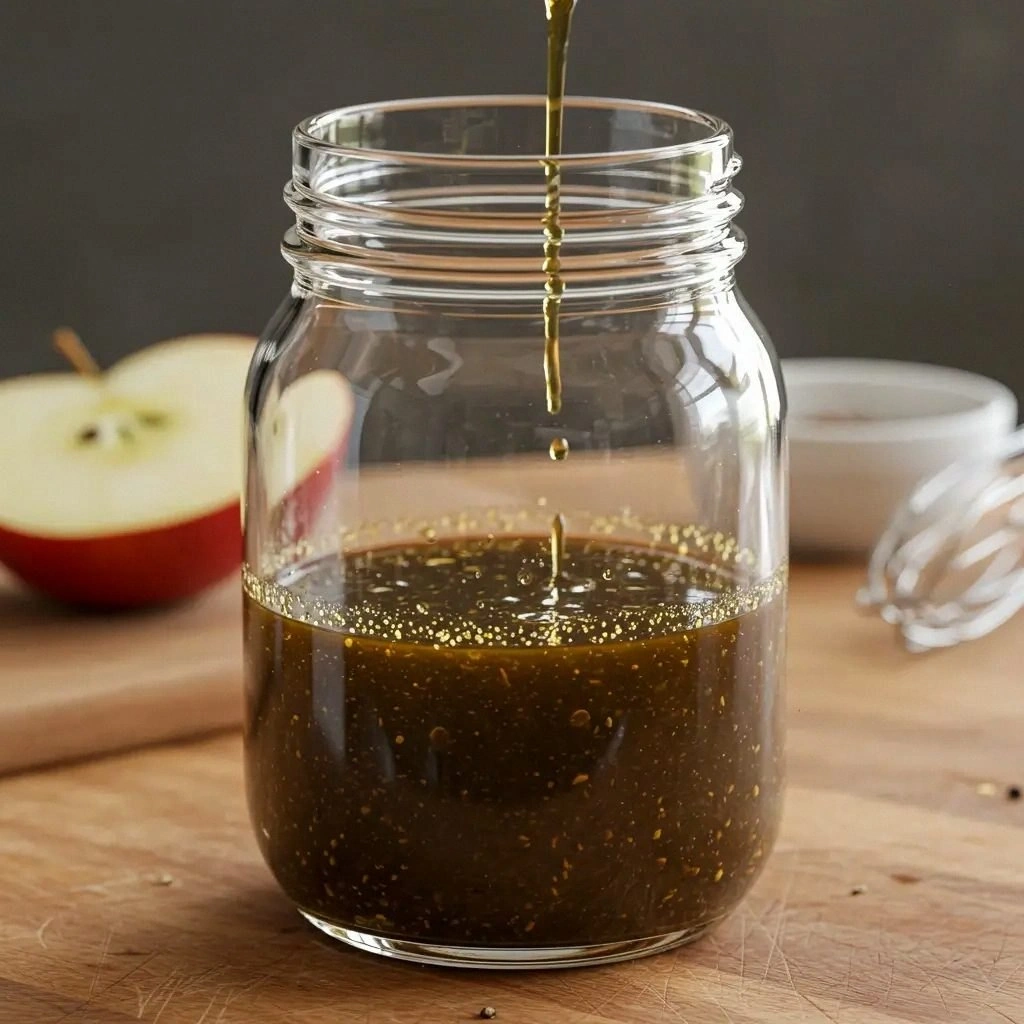
- Start by whisking together 1 cup of red wine, 2 tablespoons of red wine vinegar, 1 teaspoon of Dijon mustard, 1 clove of minced garlic, and 1 small finely chopped shallot in a medium bowl. Whisk vigorously until the mixture is a uniform, slightly frothy consistency. This initial whisking is crucial; it ensures the mustard emulsifies the oil and wine before they even meet. The aroma that rises from this blend is a promise of the complex flavor profile to come.
- Slowly drizzle in 1/4 cup of extra‑virgin olive oil while continuing to whisk. The oil should be added in a thin stream to help the emulsion form smoothly. As you stir, notice the mixture thickening slightly—this is the emulsion taking shape. If it looks too thin, give it a minute more of whisking to bring it together.
- Stir in 1 teaspoon of honey (or your chosen sweetener) and a pinch of salt and pepper to taste. The honey balances the acidity and adds a gentle sheen to the dressing. Taste the mixture; it should have a bright, fruity note from the wine, a subtle tang from the vinegar, and a mellow sweetness from the honey.
- Add 2 tablespoons of fresh parsley and 1 tablespoon of thyme leaves. These herbs should be chopped finely to release their oils without overwhelming the dressing. The parsley adds a clean, peppery finish, while the thyme contributes a faint woodsy undertone that enriches the overall flavor.
- Let the vinaigrette sit at room temperature for about 10 minutes. This resting period allows the flavors to marry and the emulsion to stabilize. If you’re in a hurry, you can skip this step, but the result will be slightly less harmonious.
- While the dressing rests, prepare the salad base. Wash and dry a mix of arugula, spinach, and romaine lettuce. Pat the greens dry with a salad spinner or a clean towel; excess moisture will dilute the dressing and cause it to break.
- Add halved cherry tomatoes, sliced cucumber, thinly sliced red onion, and toasted almonds or walnuts for crunch. Toss the vegetables gently to distribute the textures evenly. The nuts add a satisfying crunch that contrasts with the silky dressing.
- Just before serving, pour the vinaigrette over the salad and toss vigorously. The goal is to coat every leaf and bite of vegetable with the dressing. If the salad looks dry, add a splash of water or a few extra drops of oil to rehydrate.
- Serve immediately, garnished with a few extra thyme sprigs or a sprinkle of grated Parmesan for an extra layer of flavor. The aroma of freshly dressed greens will fill your kitchen, and the first bite will deliver that perfect balance of sweet, acidic, and savory.
- If you’re preparing this salad ahead of time, store the dressing and salad separately in airtight containers. When you’re ready to serve, combine them, toss, and enjoy. The dressing will remain vibrant for up to 48 hours, especially if refrigerated.
That’s it—you did it. But hold on, I’ve got a few more tricks that will take this to another level. Let’s dive into insider tips that will make your vinaigrette the talk of the town.
Insider Tricks for Flawless Results
The Temperature Rule Nobody Follows
The key to a perfect emulsion is temperature control. If the ingredients are too cold, the mustard won’t emulsify properly, and the dressing will separate. Aim for room temperature for all components, especially the wine and oil. If you’re in a rush, let the wine sit out for a few minutes before whisking.
Why Your Nose Knows Best
Before you even taste the dressing, give it a sniff. The aroma should be a harmonious blend of fruity wine, sharp vinegar, and fresh herbs. If it smells too sharp or off, it’s a sign that the acidity is too high. Adjust by adding a splash of water or a little more oil.
The 5‑Minute Rest That Changes Everything
Letting the dressing sit for 5 minutes after whisking allows the flavors to meld. I’ve seen people skip this step, and the result is a dressing that tastes like a rushed cocktail. Trust me, those extra 5 minutes make all the difference.
Add a Touch of Heat
A pinch of red pepper flakes adds a gentle heat that balances the sweetness. If you prefer a milder dressing, use just a pinch or omit it entirely. The heat is subtle, but it elevates the overall flavor profile.
The Secret to a Long‑Lasting Emulsion
If you’re planning to make the dressing ahead of time, add a small amount of xanthan gum (about 1/8 teaspoon). This natural thickener keeps the dressing from separating, even after being refrigerated for a couple of days. It’s a secret that many chefs use but rarely share.
Avoid Over‑Tossing
When you toss the salad with the dressing, do it just enough to coat. Over‑tossing can break down the greens and release too much moisture, causing the dressing to become watery. A gentle toss is all you need.
Creative Twists and Variations
This recipe is a playground. Here are some of my favorite ways to switch things up:
Mediterranean Mix‑Up
Swap the arugula for a mix of spinach and romaine, and add kalamata olives, feta cheese, and a squeeze of lemon. The feta’s briny tang pairs wonderfully with the wine vinaigrette, and the olives add a salty crunch.
Autumn Harvest
Add roasted butternut squash cubes, dried cranberries, and toasted pecans. The sweetness of the squash and cranberries contrasts beautifully with the acidic dressing, creating a fall‑seasonal masterpiece.
Protein Power
Top the salad with grilled chicken breast or seared tofu for a protein boost. The meat’s savory flavor complements the dressing, while the tofu offers a lighter, plant‑based option.
Summer Citrus Splash
Incorporate segments of grapefruit or orange, and sprinkle with a handful of fresh mint. The citrus adds a bright, refreshing note that lifts the entire dish.
Spicy Kick
Add sliced jalapeño or a dash of sriracha to the vinaigrette. The heat cuts through the richness, giving the salad an extra zing that’s perfect for a summer BBQ.
Cheese & Cracker Combo
Serve the salad alongside a platter of artisanal crackers and a selection of aged cheeses. The crunchy crackers provide a textural counterpoint, while the cheese adds depth and richness.
Storing and Bringing It Back to Life
Fridge Storage
Store the dressing in a sealed jar or glass container in the refrigerator for up to 48 hours. The flavors will continue to develop, creating a richer, more complex taste. Remember to give it a good shake before using.
Freezer Friendly
The vinaigrette can be frozen for up to 3 months. Use an airtight container and leave a little space at the top for expansion. Thaw overnight in the refrigerator, then stir well before serving.
Best Reheating Method
If you’re reheating the dressing, do so gently over low heat, stirring constantly to prevent separation. Add a splash of water or a few drops of oil to rehydrate and restore that silky texture. This trick keeps the dressing from becoming dry or greasy.