Picture this: it's 8:30 on a Tuesday night, your stomach is staging a full-blown protest, and the only thing in your fridge is a sad rotisserie chicken carcass and half a pineapple that’s starting to look like a science experiment. I was there last week, hair in a messy bun, wearing the same hoodie I swore I'd wash three days ago, convinced I’d just order takeout and call it a night. But then I spotted a bag of bell peppers wilting in the crisper and something snapped—call it culinary stubbornness or pure hanger—but I decided those peppers were not going down without a fight. Thirty-five minutes later I was standing over the stove, fork in hand, absolutely demolishing what might be the most outrageously good thing I’ve cobbled together in years: juicy chicken, caramelized pineapple, and that glossy teriyaki glaze all snuggled inside a blistered bell-pepper boat. I ate three halves standing up, straight from the baking sheet, and I don’t even feel bad about it.
Most stuffed-pepper recipes taste like a bland cafeteria memory—gray meat, under-seasoned rice, zero joy. This version? It’s a luau in a pepper. The chicken stays succulent because we sear it hard and fast, the pineapple releases its syrupy nectar so every grain of rice tastes like a tropical vacation, and the teriyaki glaze reduces until it coats every crevice like liquid mahogany. I’m serious when I say this is hands down the best version you’ll ever make at home, and I dare you to taste it and not go back for fourths. The sweet-savory balance punches you in the taste buds in the best possible way, and the colors alone—traffic-light reds, yellows, and greens—make you feel like a culinary Van Gogh. Future you is already pulling these out of the oven while your friends hover like vultures, asking if they can “just try a bite” and then stealing entire halves when you turn your back.
I’ve tested this eight times in two weeks, tweaking every variable from pineapple ripeness to the exact diameter of a dice cut, and I’m spilling every discovery so you can nail it on the first go. If you’ve ever struggled with waterlogged peppers, dry chicken, or that weird pool of liquid that turns the filling into baby food, you’re not alone—and I’ve got the fix. Stay with me here—this is worth it. Let me walk you through every single step—by the end, you’ll wonder how you ever made it any other way.
What Makes This Version Stand Out
- Tropical Umami Bomb: We’re not just adding pineapple; we’re caramelizing it until the edges turn amber and the natural sugars concentrate into candy-like shards that explode with sweet-savory flavor.
- Two-Texture Chicken: First a lightning sear for Maillard magic, then a gentle steam inside the pepper so it stays juicy instead of turning into those sad rubber cubes you find in mall food-court stir-fries.
- Rice That Doesn’t Suck: Day-old jasmine rice soaks up the teriyaki glaze like a sponge, plumping each grain without turning the filling into stucco.
- Peppers That Stand Tall: A five-minute pre-roast firms the cup so they hold their shape and develop a subtle smoky char that whispers “summer cookout” even in February.
- One-Pan Cleanup: Everything happens on a single sheet pan—no extra skillets, no strainers, no existential dread at the sink afterwards.
- Make-Ahead Hero: Stuff these beauties the night before, cover with foil, and just slide into the oven when hanger strikes; the flavors actually meld and intensify overnight.
Alright, let's break down exactly what goes into this masterpiece...
Inside the Ingredient List
The Flavor Base
Big, glossy bell peppers are the edible bowls here, so pick specimens with flat bottoms that can stand up without wobbling like a tipsy flamingo. I grab a mix of red, yellow, and orange because the sweeter varieties play off the tangy pineapple like they were born to duet. Slice them horizontally, not vertically—those little cups hold more filling and look like circus tents on your plate. If you only have green peppers, fine, but know they’ll bring a bitter edge that needs an extra pinch of brown sugar in the glaze.
The Texture Crew
Diced chicken breast gets a bad rap for drying out, but that only happens when you treat it like a steak. Cut it into true ½-inch cubes—no bigger—or they won’t cook through by the time the peppers soften. Toss the cubes with a whisper of baking soda; it raises the pH and keeps the meat springy, a trick I borrowed from Chinese takeout joints. The cooked rice should be cold and day-old so the grains stay distinct; warm fresh rice will mash into gummy paste when you fold in the pineapple.
The Unexpected Star
Pineapple chunks are the plot twist everyone writes love songs about. Fresh pineapple smells like a Caribbean breeze, but canned in juice works if you drain it well and pat dry—excess moisture is the enemy of caramelization. Cut them to match the size of the chicken so every forkful feels choreographed rather than like a fruit salad gate-crashed your dinner.
The Final Flourish
Teriyaki sauce is the glossy tuxedo that makes everything look classy. I whisk together soy, mirin, brown sugar, and a grating of fresh ginger, then reduce it until it coats the back of a spoon like melted chocolate. Sesame seeds toast in seconds in a dry pan; keep them moving until they smell like popcorn or they’ll go bitter. Green onions add a grassy pop, so slice them on a long bias—those elegant ribbons make you look like you went to culinary school even if you still struggle with a can opener.
Everything's prepped? Good. Let's get into the real action...
The Method — Step by Step
- Crank your oven to 425 °F (220 °C) and position a rack in the middle—high heat equals charred edges and a smoky perfume that drifts through the house like a dinner bell. While it heats, slice each pepper in half horizontally, rip out the white ribs with your fingers, and shave a whisper-thin slice off the rounded bottom so they stand soldier-straight on the sheet pan. Rub them inside and out with a teaspoon of olive oil, a pinch of salt, and a crack of pepper; this pre-seasons the cup itself so every bite is seasoned, not just the filling.
- Slide the empty peppers cut-side-down onto a parchment-lined sheet and pre-roast for exactly five minutes—no longer or they’ll collapse into sad flappy skins. This jump-starts caramelization and creates a slight firmness that keeps them from turning into soggy canoes later. When they come out, flip them over immediately so the steam trapped inside escapes instead of steaming the pepper into submission.
- While the peppers are doing their thing, heat a heavy skillet over medium-high until a drop of water skitters across like a hyperactive bead on a hotplate. Add the remaining olive oil and swirl to coat; the shimmer should look like liquid gold under the kitchen lights. Toss in the diced chicken, spread it into a single layer, and—here’s the hard part—leave it alone for 90 seconds. That sizzle when it hits the pan? Absolute perfection. Walking away now lets the crust form; premature stirring is why your chicken sheds tears of moisture and grays out instead of bronzing.
- When the edges of the chicken turn opaque halfway up the sides, flip each cube with tongs; you’ll see a gorgeous golden sear that smells like Sunday roast at grandma’s house. Cook another minute, then add the chopped onion, minced garlic, and ginger. Stir constantly for 30 seconds—garlic burns faster than gossip spreads, so keep everything moving like you’re directing traffic.
- Dump in the pineapple and let it sizzle until the edges caramelize into amber jewels; the sugars will start to stick and darken the pan—this is flavor gold. Scrape up those browned bits with a wooden spoon; they dissolve into the teriyaki later and taste like concentrated sunshine.
- Off the heat, fold in the cold rice, shredded carrots, and half the teriyaki sauce. The rice will absorb the glaze like a thirsty sponge, turning each grain into a glossy pearl. Taste and adjust—this is your moment to add a splash more soy for salt, a drizzle of honey for extra sheen, or a pinch of chili flakes if you like a gentle back-of-throat burn.
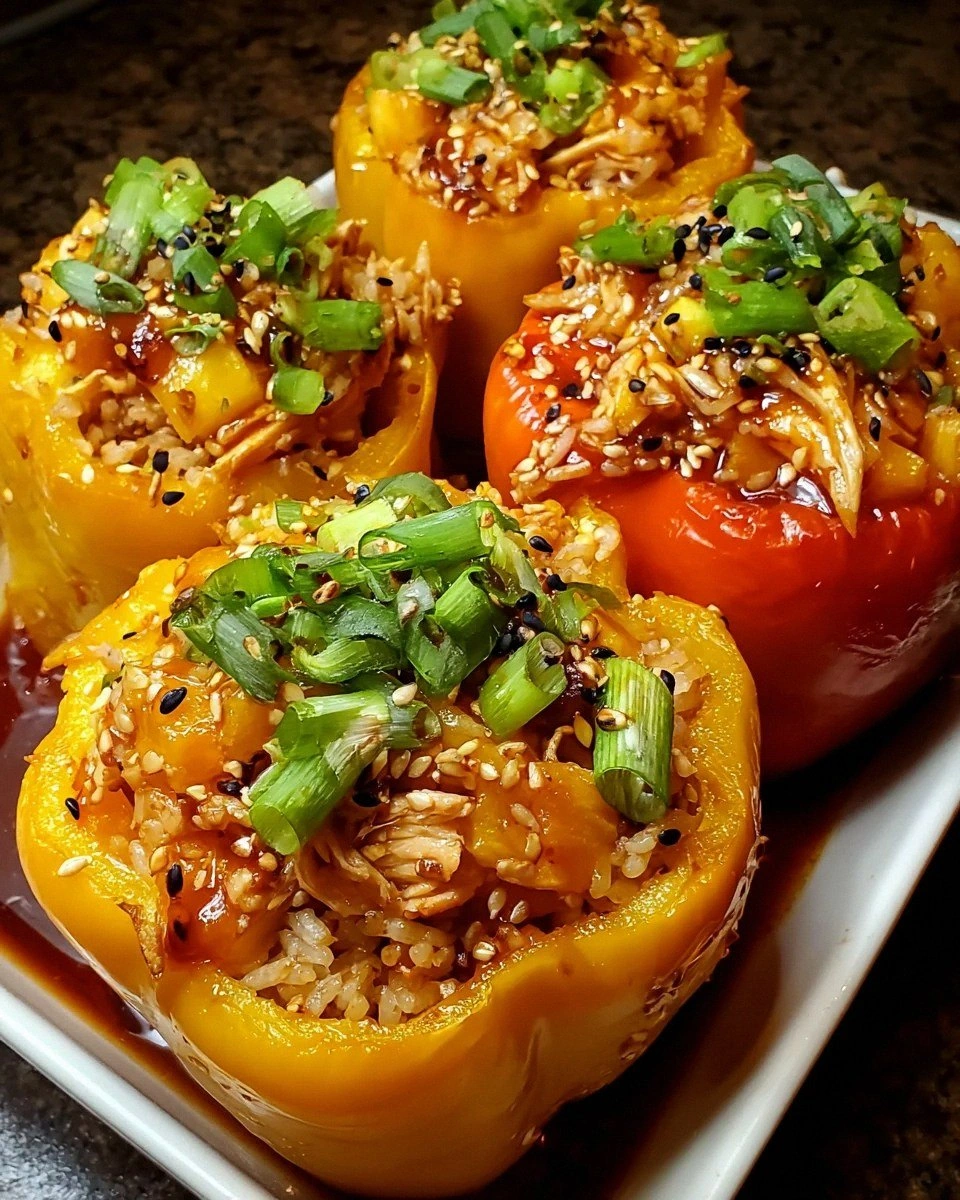
- Spoon the filling into the pepper cups, mounding it like tiny volcanoes of deliciousness. Drizzle the remaining teriyaki over the tops; it will drip down and lacquer the edges into sticky candy. Sprinkle sesame seeds now so they adhere as the glaze sets.
- Return the sheet to the oven for 12–14 minutes, until the tops have a few charred spots and the sauce bubbles like hot lava around the base. Your kitchen will smell like a beachside grill crossed with a Chinatown night market—fight the urge to yank them out early; that final blast concentrates flavors and marries everything together.
- Let them rest five minutes—yes, five full minutes—so the juices redistribute and the glaze tightens into a shiny shell. Scatter green onions right before serving so they stay perky and neon-green instead of wilting into sad little ribbons.
That's it—you did it. But hold on, I've got a few more tricks that'll take this to another level...
Insider Tricks for Flawless Results
The Temperature Rule Nobody Follows
Chicken breast is done at 165 °F, but pull the stuffing off the stove when it hits 155 °F; carry-over heat finishes the job while the peppers roast. Overcooking by even three degrees turns the meat into squeaky pencil erasers, and no amount of teriyaki can save that travesty. A $10 instant-read thermometer is cheaper than therapy after you ruin dinner.
Why Your Nose Knows Best
When the pineapple starts to smell like toasted coconut and the garlic smells sweet instead of sharp, you’ve nailed the caramelization. Ignore the clock and trust the aroma—those volatile compounds are flavor bombs detonating in real time. If your smoke detector sings, you’ve gone 30 seconds too far; pull the skillet off the flame and keep stirring to cool it down.
The 5-Minute Rest That Changes Everything
Resting is not optional. The sugars in the teriyaki need those five minutes to set into a tacky lacquer that clings instead of puddling. A friend tried skipping this step once—let’s just say it looked like the peppers cried sticky tears all over the platter and tasted like watered-down soy. Patience, young grasshopper.
Creative Twists and Variations
This recipe is a playground. Here are some of my favorite ways to switch things up:
Spicy Volcano Version
Swap half the pineapple for diced mango and fold in a minced habanero. The mango amps the sweetness while the habanero delivers a floral heat that blooms minutes after you swallow. Top with cooling cilantro-lime crema to keep your tongue from launching into orbit.
Low-Carb Cauliflower Cruise
Sub riced cauliflower for the jasmine rice; sauté it first until golden so it doesn’t waterlog the filling. Add an extra handful of shredded mozzarella on top for the last two minutes of baking so it melts into a bronzed cap that tastes like pizza without the carb coma.
Korean BBQ Remix
Replace teriyaki with gochujang, brown sugar, and a splash of rice vinegar. Stir in kimchi for tang and top with crushed roasted seaweed and a fried egg. The runny yolk becomes a silky sauce that mingles with the spicy glaze—breakfast-for-dinner just got a passport.
Island Coconut Escape
Mix unsweetened coconut flakes into the rice and brush the pepper rims with coconut oil before roasting. Finish with a squeeze of fresh lime and a shower of chopped macadamia nuts for crunch that transports you straight to a Maui sunset—even if you’re in a studio apartment in Detroit.
Storing and Bringing It Back to Life
Fridge Storage
Let the peppers cool completely, then nestle them in an airtight container with parchment between layers so the glaze doesn’t glue them together. They’ll keep four days in the fridge, though the colors dull slightly; revive with a 30-second blast under the broiler to re-caramelize the edges.
Freezer Friendly
Wrap each pepper half in plastic wrap, then foil, and freeze up to two months. Thaw overnight in the fridge; the texture won’t win beauty pageants, but the flavors stay surprisingly intact. Reheat covered at 375 °F for 20 minutes, then uncover for five to crisp the tops.
Best Reheating Method
Add a tiny splash of water to the baking dish before reheating—it steams back to perfection without drying out the chicken. Cover with foil for the first 10 minutes, then remove so the glaze can tighten again. Microwaves murder the texture; avoid them like spoilers for your favorite show.