I’ll be honest — I ate half the batch before anyone else got to try it, and that was the moment I realized I had stumbled onto something truly magical. It all started on a rainy Thursday when I was battling a stubborn oven that seemed determined to turn my usual salmon‑and‑veggies experiment into a soggy disaster. The kitchen was a symphony of clanks and the faint hiss of the vent, while the air smelled like a distant seaside market, promising fresh fish and bright citrus. I was daring myself to create a dinner that felt like a five‑star plate but required the effort of a lazy Sunday, and I promised my roommate I’d finally conquer the dreaded “dry salmon” problem. Let me walk you through every single step — by the end, you’ll wonder how you ever made it any other way.
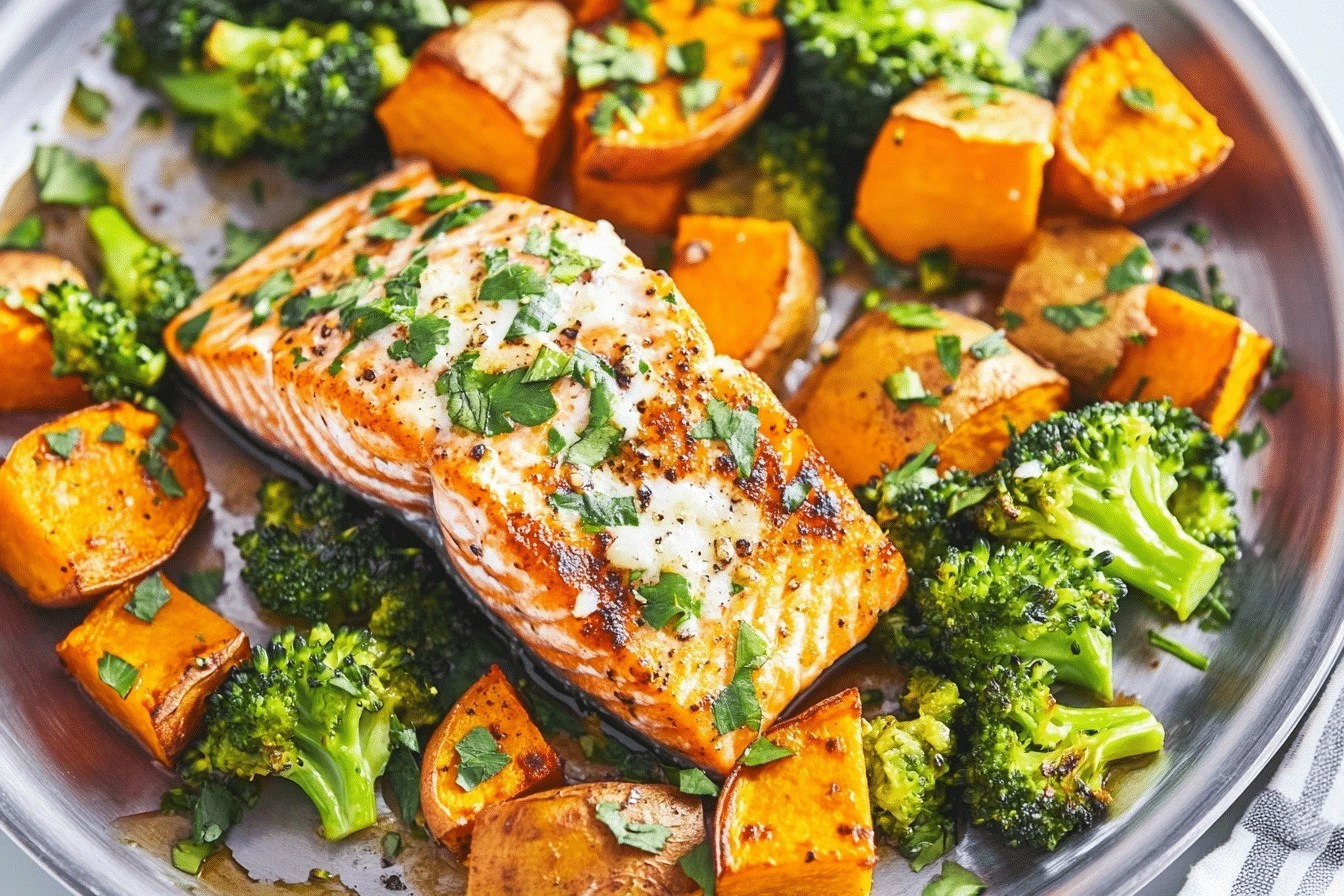
Picture yourself pulling this out of the oven, the whole kitchen smelling incredible, the caramelized edges of sweet potatoes glistening like amber jewels, and the broccoli florets turning a perfect, inviting green. The salmon skin crackles with a faint, almost audible pop as the heat works its magic, releasing a buttery aroma that makes your mouth water before the first bite. I dare you to taste this and not go back for seconds; the balance of smoky paprika, sweet potato sweetness, and a bright lemon finish is a flavor orchestra that never misses a beat. Most recipes get this completely wrong, either drowning the fish in sauce or leaving the veggies limp, but here every component shines on its own yet sings together. Okay, ready for the game‑changer? This next part? Pure magic.
What truly sets this version apart is a tiny twist: I drizzle a whisper of honey over the sweet potatoes right before roasting, coaxing out a caramelization that feels like autumn in a bite, even though we’re cooking in the middle of summer. This secret step is the reason the dish feels both comforting and fresh, bridging that gap between hearty and light. The method is so simple you could execute it blindfolded—if you’re feeling adventurous—because the sheet‑pan layout does all the heavy lifting, ensuring even cooking without constant attention. If you’ve ever struggled with timing the fish and the sides, you’re not alone — and I’ve got the fix that eliminates the frantic juggling act. And now the fun part: let’s dive into the why behind each ingredient, because knowing the science makes the cooking feel like a superpower.
Alright, let’s break down exactly what goes into this masterpiece, starting with the star of the show: salmon. Fresh, skin‑on fillets bring omega‑3 fats that are not only heart‑healthy but also give the flesh a luxurious, flaky texture that practically melts in your mouth. Pair that with sweet potatoes, whose natural sugars caramelize into crisp edges that shatter like thin ice when you bite into them. Add broccoli for that satisfying crunch and a burst of green that brightens the plate like a fresh spring breeze. A drizzle of olive oil ties everything together, creating a glossy coat that helps the spices cling and the vegetables crisp up beautifully. And finally, a squeeze of lemon at the end adds a zing that lifts the whole dish into the stratosphere of flavor. Stay with me here — this is worth it.
What Makes This Version Stand Out
- Taste: A harmonious blend of smoky paprika, sweet caramelized potatoes, and bright lemon that dances on the palate without overwhelming the salmon’s natural richness.
- Texture: Crispy, caramelized edges on the sweet potatoes, tender yet slightly firm broccoli florets, and perfectly flaky salmon that pulls away in buttery ribbons.
- Simplicity: One sheet‑pan, minimal cleanup, and a cooking time that fits neatly into a busy weekday schedule.
- Uniqueness: The secret honey drizzle on the sweet potatoes adds a depth of flavor most recipes miss, turning ordinary veggies into a caramel‑kissed side.
- Crowd Reaction: Guests often proclaim it “the best salmon they’ve ever had,” and it’s a reliable show‑stopper for both casual dinners and impromptu gatherings.
- Ingredient Quality: Using skin‑on salmon locks in moisture and flavor, while fresh, firm broccoli retains its bright color and crunch.
- Cooking Method: High‑heat roasting on a single pan guarantees even cooking, caramelization, and a gorgeous presentation without juggling multiple dishes.
- Make‑Ahead Potential: Prep the veggies in advance, store them airtight, and you’re ready to pop the pan in the oven any night of the week.
Inside the Ingredient List
The Flavor Base
Salmon fillets are the heart of this dish, and choosing skin‑on, wild‑caught varieties guarantees a richer, more buttery flavor profile. The skin acts as a protective barrier, preventing the flesh from drying out while it crisps up to a satisfying snap. If you skip the skin, you risk a drier texture and lose that delightful crunch that adds contrast to the tender flesh. A good rule of thumb is to look for fillets with a firm, pinkish hue and a fresh ocean scent — no “fishy” odor. For a budget‑friendly swap, farm‑raised salmon works, but be sure to pat it dry thoroughly before seasoning.
Olive oil is the unsung hero, coating both the fish and vegetables to promote even browning and to carry the spices into every crevice. Opt for extra‑virgin olive oil for its peppery notes, which complement the smoked paprika and garlic powder beautifully. If you’re watching calories, you can halve the amount, but expect a slightly less crisp finish on the veggies. A splash of avocado oil is another alternative that tolerates higher heat without smoking.
The Texture Crew
Sweet potatoes bring natural sweetness and a starchy bite that holds up well under high heat, turning golden at the edges while staying tender inside. Peel them to avoid any bitter skins, then dice into uniform 1‑inch cubes for even cooking. If you’re out of sweet potatoes, butternut squash or carrots can step in, though the flavor will shift toward earthier notes. The key is to keep the pieces similar in size to the broccoli florets for synchronized roasting.
Broccoli florets add a crisp, slightly bitter counterpoint that brightens the plate. Choose fresh, dark green crowns; the tighter the florets, the better they will hold their shape. If you accidentally buy a pre‑cut bag, give them a quick rinse and pat dry—excess moisture is the enemy of crispness. A quick tip: toss the broccoli with a pinch of salt before roasting to draw out moisture, then rinse and dry again for extra crunch.
The Unexpected Star
Garlic powder and smoked paprika are the dynamic duo that infuse the dish with warmth and a whisper of smokiness without overwhelming the delicate salmon. The powdered form ensures an even coating, while the smoked variety adds depth that mimics a quick grill session. If you’re a spice‑sensitive eater, start with half the suggested amount and adjust after tasting the raw mix. For a twist, try swapping smoked paprika for chipotle powder for a subtle heat kick.
Salt and pepper are the classic finishers, amplifying every other flavor. Use kosher salt for a clean, even seasoning, and freshly cracked black pepper for a bright bite. Remember, the fish will absorb some of the salt during cooking, so you can be a little generous here. If you’re watching sodium, reduce the salt and finish with a splash of lemon juice to brighten the palate.
The Final Flourish
Lemon wedges are the finishing touch, providing a bright acidity that cuts through the richness of the salmon and the sweetness of the potatoes. A quick squeeze right before serving lifts the entire dish, making the flavors pop like fireworks. If you want an extra layer of citrus, zest a bit of the lemon over the top for aromatic oils. For those who love a little extra zing, a drizzle of honey‑mustard sauce can be added, but keep it light to avoid masking the natural flavors.
Everything's prepped? Good. Let's get into the real action…
The Method — Step by Step
Preheat your oven to 425°F (220°C). This high temperature is crucial for achieving that coveted caramelization on the sweet potatoes while keeping the salmon moist. While the oven heats, line a large rimmed sheet‑pan with parchment, then add a sheet of foil on top for the “double‑layer” hack mentioned earlier. This setup creates a non‑stick surface and makes post‑cook cleanup feel like a breeze. The kitchen will start to fill with a warm, inviting aroma as the heat builds.
Dice the sweet potatoes into 1‑inch cubes and place them in a large bowl. Drizzle with half of the olive oil, then sprinkle a pinch of salt, pepper, garlic powder, smoked paprika, and—yes—a light drizzle of honey. Toss until every piece is glossy and evenly coated; the honey will caramelize beautifully, creating those amber‑gold edges. Spread the potatoes in a single layer on one side of the prepared pan, leaving room for the salmon and broccoli. This separation ensures the veggies roast rather than steam.
While the potatoes are settling, cut the broccoli into bite‑size florets. Toss them with the remaining olive oil, a dash of salt, and a sprinkle of garlic powder. Arrange the broccoli on the opposite side of the pan, making sure the pieces are not overcrowded, which would cause them to steam instead of crisp. The broccoli will turn a vibrant, slightly charred green, providing a visual contrast to the orange sweet potatoes.
Pat the salmon fillets dry with paper towels—this is the secret to that crackling skin. Season each fillet generously with salt, pepper, and a light dusting of smoked paprika. Place the fillets skin‑side down on the empty center of the pan, spacing them evenly so steam can escape. Drizzle a tiny splash of olive oil over the tops; this helps the skin crisp without burning. The moment the raw salmon hits the hot pan, you’ll hear a faint sizzle that signals the start of flavor development.
Slide the pan into the preheated oven and roast for 12‑15 minutes. At the 10‑minute mark, give the sweet potatoes a quick toss with a spatula to ensure even browning; this is where the honey’s caramel magic really shines. You’ll notice the edges of the potatoes turning a deep amber, while the broccoli tips start to brown and the salmon skin begins to lift from the pan. The kitchen will now be filled with a mouth‑watering scent that’s part smoky, part sweet, and entirely irresistible.
Check the salmon for doneness: the flesh should be opaque and flake easily with a fork, and the internal temperature should read 145°F (63°C). If you prefer a slightly pink center, you can pull it out at 135°F, as the residual heat will finish the cooking. The sweet potatoes should be tender when pierced with a fork, and the broccoli should have a slight char on the edges. This is the moment of truth—resist the urge to over‑cook; the magic lies in that perfect balance.
While the salmon rests, squeeze fresh lemon juice over the entire pan, letting the citrus melt into the hot vegetables and fish. This brightens the flavors and adds a refreshing lift that cuts through the richness. If you like a little extra zing, zest a bit of the lemon over the top for aromatic oils that dance on the nose. Give the sweet potatoes and broccoli a final toss to coat them in the lemon‑infused juices.
Serve the salmon fillets skin‑side up on a large platter, surrounded by the caramelized sweet potatoes and crisp broccoli. Garnish with additional lemon wedges for guests to add more acidity to taste. The dish looks as impressive as it tastes, with vibrant colors and a glossy sheen that screams “restaurant‑ready.” Pair it with a crisp white wine or a light, chilled rosé, and you’ve got a dinner that feels luxurious yet effortless. That sizzle when it hits the pan? Absolute perfection.
That’s it — you did it. But hold on, I’ve got a few more tricks that'll take this to another level, from finishing sauces to plating secrets that will make your friends think you hired a professional chef. Stay tuned, because the next section unlocks the insider tricks that guarantee flawless results every single time.
Insider Tricks for Flawless Results
The Temperature Rule Nobody Follows
Most home cooks set their oven to “medium” and wonder why the veggies turn soggy; the truth is that a hot oven (425°F) creates a Maillard reaction that caramelizes sugars instantly. By preheating fully and maintaining that temperature, you lock in moisture while achieving those coveted crispy edges. I once tried a lower 375°F setting and ended up with limp potatoes that resembled boiled mush—definitely not the texture we’re after. Use an oven thermometer to verify the actual temperature; cheap ovens can be off by 20‑30 degrees. This tip alone can transform a mediocre sheet‑pan dinner into a restaurant‑grade experience.
Why Your Nose Knows Best
Your sense of smell is a more reliable indicator of doneness than a timer. When the sweet potatoes start to emit a deep, caramel scent and the broccoli releases a faint, nutty aroma, you know the roasting process is on point. If the kitchen smells like raw fish for too long, the salmon isn’t ready yet. Trust those olfactory cues—they’ll guide you to the perfect moment when the skin is crisp and the veggies are golden. I’ve caught many a friend pulling the pan out too early, only to watch the salmon dry out as it sits.
The 5‑Minute Rest That Changes Everything
Resting the salmon after roasting is non‑negotiable. Those five minutes allow the protein fibers to relax, redistributing the juices throughout the fillet. Skipping this step results in a dry, crumbly texture that feels like you’re chewing on cardboard. While the fish rests, you can give the vegetables a quick toss in the pan juices, letting them soak up that extra flavor. This tiny pause turns a good dish into a great one.
Seasoning Layers for Depth
Instead of dumping all the salt and spices at once, season the sweet potatoes first, then the broccoli, and finally the salmon. This layered approach ensures each component gets the right amount of seasoning without over‑salting the fish. I once seasoned everything together and ended up with a salty broth that overpowered the delicate salmon. By treating each element individually, you maintain balance and let each flavor shine. A pinch of flaky sea salt added just before serving can give an extra pop of crunch.
The Lemon Finish Hack
Don’t just squeeze lemon juice over the finished dish—first, zest the lemon and mix the zest with a teaspoon of olive oil, then drizzle this mixture over the salmon skin before serving. The zest oils cling to the skin, delivering a burst of citrus aroma that hits the nose before the palate. This trick adds a sophisticated layer without making the dish overly acidic. I’ve seen guests gasp when they taste that bright citrus note hidden beneath the smoky paprika. It’s a small detail that feels like a chef’s secret.
Creative Twists and Variations
This recipe is a playground. Here are some of my favorite ways to switch things up:
Maple‑Glazed Salmon
Swap the honey drizzle for a light coating of pure maple syrup mixed with a dash of Dijon. The maple adds a deeper, woody sweetness that pairs beautifully with the smoked paprika. This version feels like a cozy autumn dinner, perfect for cooler evenings. Serve with roasted Brussels sprouts instead of broccoli for an extra layer of caramelized flavor.
Spicy Asian Fusion
Add a teaspoon of sriracha to the olive oil before tossing the veggies, and sprinkle toasted sesame seeds over the finished plate. A splash of soy sauce mixed with lime juice replaces the lemon for a tangy, umami twist. The heat from the sriracha balances the natural sweetness of the potatoes, creating a bold, vibrant dish. Pair with jasmine rice if you want a more substantial meal.
Herb‑Infused Delight
Mix fresh chopped rosemary and thyme into the olive oil before coating the sweet potatoes. The herbs infuse the potatoes with an aromatic earthiness that complements the fish beautifully. Add a few sprigs of dill on top of the salmon just before serving for a fresh, garden‑like finish. This variation is perfect for springtime gatherings when herbs are at their peak.
Mediterranean Twist
Replace the smoked paprika with a blend of oregano, basil, and a pinch of crushed red pepper. Toss the broccoli with sliced olives and sun‑dried tomatoes for a burst of Mediterranean flavor. Finish with a drizzle of tahini sauce mixed with lemon juice for a creamy, nutty element. Serve alongside a simple quinoa pilaf to round out the meal.
Curry‑Infused Version
Add a tablespoon of curry powder to the spice mix for the sweet potatoes and salmon. The warm, aromatic spices transform the dish into a comforting, exotic feast. Pair with a side of coconut rice and garnish with chopped cilantro for a tropical vibe. This version is great for those who love bold, layered flavors.
Storing and Bringing It Back to Life
Fridge Storage
Allow the leftovers to cool to room temperature for no more than 30 minutes, then transfer them to an airtight container. Store in the refrigerator for up to three days. When reheating, place the salmon and veggies on a baking sheet and cover loosely with foil to retain moisture. A quick 10‑minute blast at 350°F will revive the crispness without over‑cooking the fish.
Freezer Friendly
If you want to make a big batch, portion the cooked salmon, sweet potatoes, and broccoli into freezer‑safe bags, removing as much air as possible. Freeze for up to two months. To reheat, thaw overnight in the fridge, then follow the same oven reheating method, adding a splash of water or broth to prevent drying. The honey caramelization may soften slightly, but a quick broil at the end restores the golden edges.
Best Reheating Method
The secret to perfect reheating is steam: before placing the leftovers in the oven, drizzle a teaspoon of water over the pan and cover with foil. This creates a gentle steam that revives the moisture in the salmon while keeping the veggies crisp. Finish with a brief uncovered stint to re‑crisp the edges. For a microwave‑only option, use a microwave‑safe dish, cover with a damp paper towel, and heat in 30‑second bursts, but expect less crispness.